Industry News · Product Education
Forehead vs Ear Thermometer: How to Explain Dual-Site Measurement at Home
Understand how forehead and ear thermometer modes differ, why readings should not be swapped, and how pharmacies can teach model-specific use.
Preface
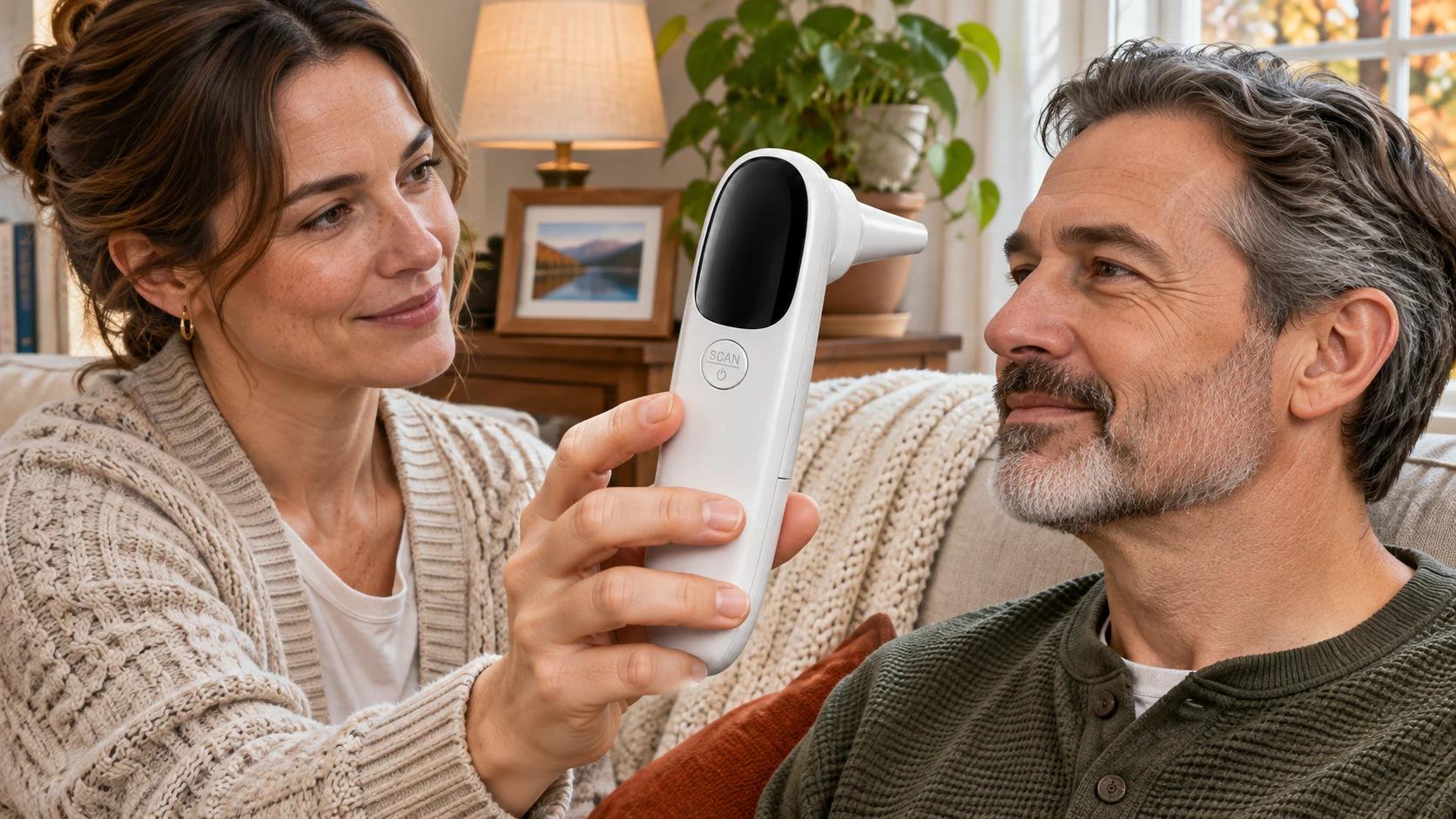
A forehead and an ear reading are not two buttons for the same measurement. They observe different sites, depend on different positioning, and may be processed differently by the device. A customer who sees two numbers needs a clear explanation of the selected mode and the current model instructions, not a promise that one site is always more accurate. This article answers that question for dual-site infrared thermometers without assigning a clinical ranking to either mode.
AXDCARE's current product data identifies AXD-IF521 as a forehead-and-ear infrared thermometer. That identifies a relevant product category; it does not establish every permitted user, age, position, accessory or cleaning step. Those details belong to the released instructions for the exact model and market. The examples below are a framework for responsible home and pharmacy education, not a replacement for clinical advice or the device IFU.
01
Start with the measurement site, not the number
A temperature value has context: the body site, the device mode, the moment of measurement and the instructions followed. Before comparing results, identify whether the display was in forehead or ear mode and whether the user followed that mode's instructions. The same person can obtain different readings from different sites without either result automatically proving a device fault. Record the site beside a reading if a caregiver, pharmacist or clinician will review it later.
A dual-site device creates an extra education task. Its packaging, quick guide and retailer page should make the mode selection visible. They should also show the correct device configuration for the mode rather than an attractive but ambiguous generic photograph. If a user cannot tell which mode is active, do not suggest switching modes until the current IFU is found.
02
What forehead mode measures and what can disturb it
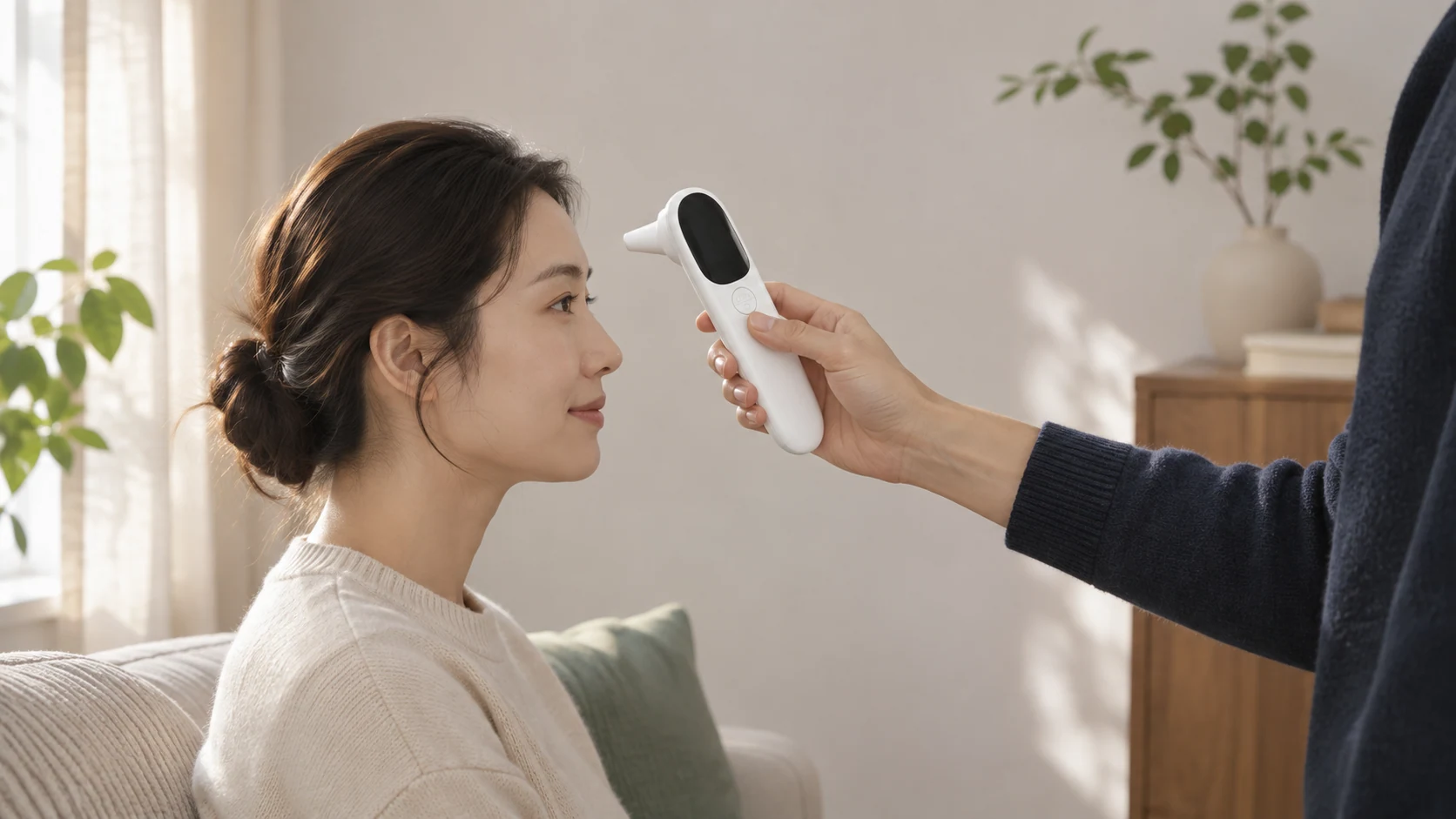
A non-contact infrared forehead thermometer detects radiation from the forehead surface and displays a device-processed temperature. The US Food and Drug Administration notes that environment and positioning can affect non-contact forehead measurements. Its public guidance calls out direct sun, drafts, head coverings, the measurement angle and the model-specific distance as factors to consider. These are reasons to follow the exact device instructions, not a generic centimetre rule copied from another thermometer.
For a homecare education page, show an unobstructed forehead, a calm indoor setting and the device held in the orientation specified by its own IFU. Do not invent a fixed distance, scan path or age claim for AXD-IF521 from a general FDA diagram. If the result seems unexpected or the person is unwell, the appropriate next step is to follow the product labeling and seek professional advice as needed, not to adjust the number by a made-up offset.
03
What changes when the ear mode is selected
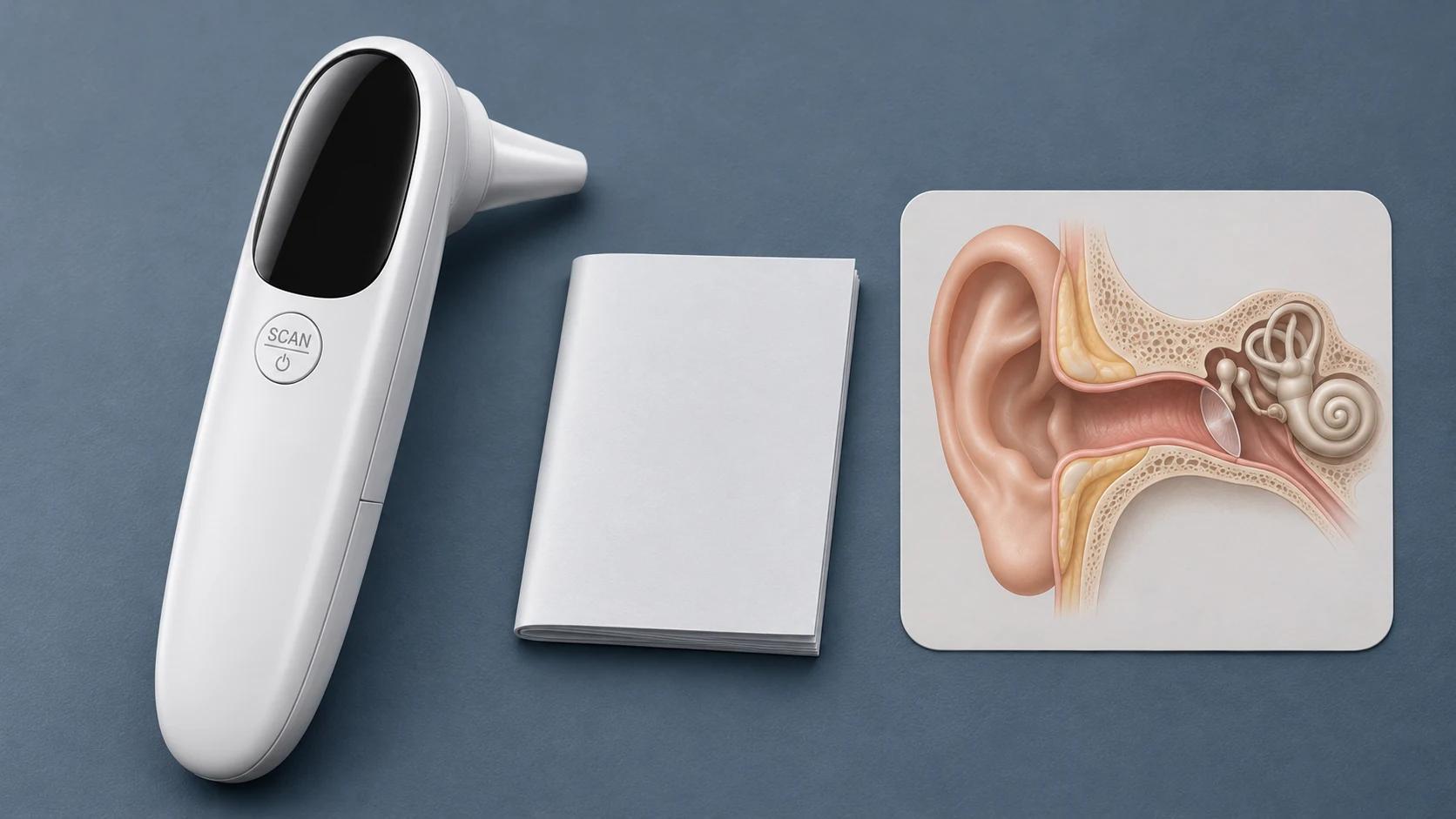
Ear thermometry observes a different anatomical site and requires a different way of presenting the sensor. The International Bureau of Weights and Measures maintains separate best-practice guides for infrared forehead and ear thermometers, which is a useful reminder that one generic instruction card should not mix the two methods. Manufacturer instructions control probe positioning, any cover or cap, hygiene and intended users for the exact device.
A retailer should avoid illustrating an unverified ear-probe shape or disposable accessory. In the AXD-IF521 context, confirm the released product variant and its included items before photographing a mode change. If a device supplied to a market has different user limits or instructions, the sales page must reflect that specific edition. Neither the mere existence of ear mode nor a faster reading establishes a clinical advantage for every user.
Middle Article Support
Plan a Dual-Site Education Set
Share the exact infrared thermometer model, target channel and user-information questions for a focused materials review.
Contact AXDCARE04
Why a forehead reading should not be converted into an ear reading
The two modes are not interchangeable scales. Forehead surface measurement may involve device-specific compensation; ear measurement has its own site and positioning factors. A fixed number added to a forehead result to 'make it an ear result' ignores the device design and the conditions in which the measurements were taken. The FDA's clinical assessment of non-contact infrared thermometers describes how hardware and algorithms can compensate for the difference between skin surface and reference sites; it does not supply a universal user conversion formula.
A comparison table for customers should therefore compare *use conditions* rather than promise one site's superiority: site observed, contact or distance behavior as documented, mode identification, positioning source, cleaning or accessory source, and whom to contact about an unexpected result. Avoid publishing a fever threshold, treatment instruction or equivalent-reading claim unless the exact product labeling and an appropriate clinical source support it.
05
Build a pharmacy and homecare explanation people can follow
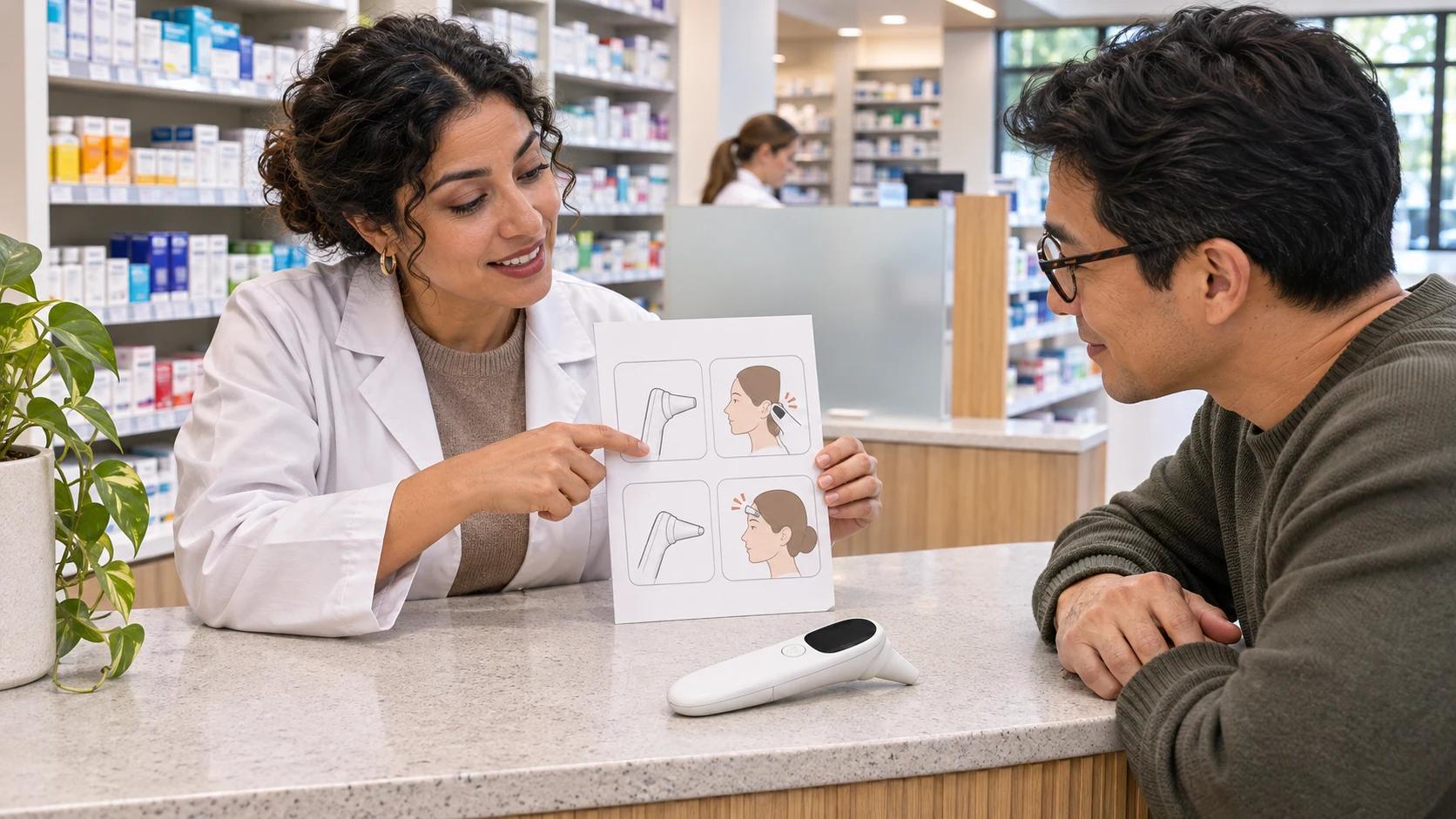
The useful retail journey begins before checkout. A product card can identify that a model has two measurement sites, while a full page should link to the correct instructions and distinguish each mode's actual steps. A short pharmacy demonstration can help a customer locate the mode indicator, identify the supplied components and understand where to find warnings and support. The demonstration should use the same revision of device and IFU that the channel sells.
When a household has more than one thermometer, explain that records should keep the device and site together. Use clear alt text and photos that show the chosen site without implying a medical outcome. For e-commerce, place mode information near the product image and keep mobile copy readable; a buried warning or a photo of the wrong configuration can turn a simple question into a support error. The pharmacist or qualified care professional remains the right person for patient-specific interpretation.
06
Check the exact model, IFU and claims before release
A distributor's final review compares the model identifier, mode names, product photograph, included accessories, language and IFU revision across the package, listing and support page. Where local medical-device rules apply, the responsible team should confirm market-specific labeling and promotional language separately. AXDCARE can discuss available model-specific materials; this article does not claim a particular certification, clearance or market authorization.
Sources reviewed 7 November 2026: FDA, Non-contact Infrared Thermometers, https://www.fda.gov/medical-devices/general-hospital-devices-and-supplies/non-contact-infrared-thermometers ; BIPM, Guides to Thermometry, https://www.bipm.org/en/committees/cc/cct/guides-to-thermometry ; FDA clinical assessment of NCITs, https://www.fda.gov/media/148876/download ; Braun Healthcare, How to Use Your Thermometer, https://www.braunhealthcare.com/uk_en/how-thermometer/ . These sources explain general measurement-site principles. The exact AXD-IF521 IFU controls its use.
Summary
A useful forehead-versus-ear explanation begins with the site, mode and exact model. It describes what can change the measurement, keeps the two reading contexts separate, and directs users to the released instructions and appropriate professional advice. For distributors, that clarity is a practical way to align packaging, online content and customer education.
Related Links
Product and Sourcing Pages
Frequently Asked Questions
Buyer Questions
Is an ear thermometer always more accurate than a forehead thermometer?+
No universal ranking follows from the site name alone. Device design, intended use, positioning and the exact instructions matter. Ask a qualified care professional about patient-specific interpretation.
Can I compare readings from the two modes directly?+
Keep each result with its device and measurement site. Do not apply an invented conversion factor between forehead and ear readings.
What should a retailer verify before teaching both modes?+
Confirm the exact model, released IFU revision, supplied parts, market language, mode labeling and support path before publishing a demonstration.
End Article Support
Review the Exact Model Materials
Discuss current model-specific IFU and product information before approving your retail or pharmacy explanation.
Discuss a Thermometer ProjectRelated Reading