Industry News · Product Guides
Infrared Thermometer vs Digital Thermometer: Which Is Better for Home Use?
Compare infrared and digital contact thermometers for home use, including measurement method, speed, comfort, consistency, and practical buying considerations.
Preface
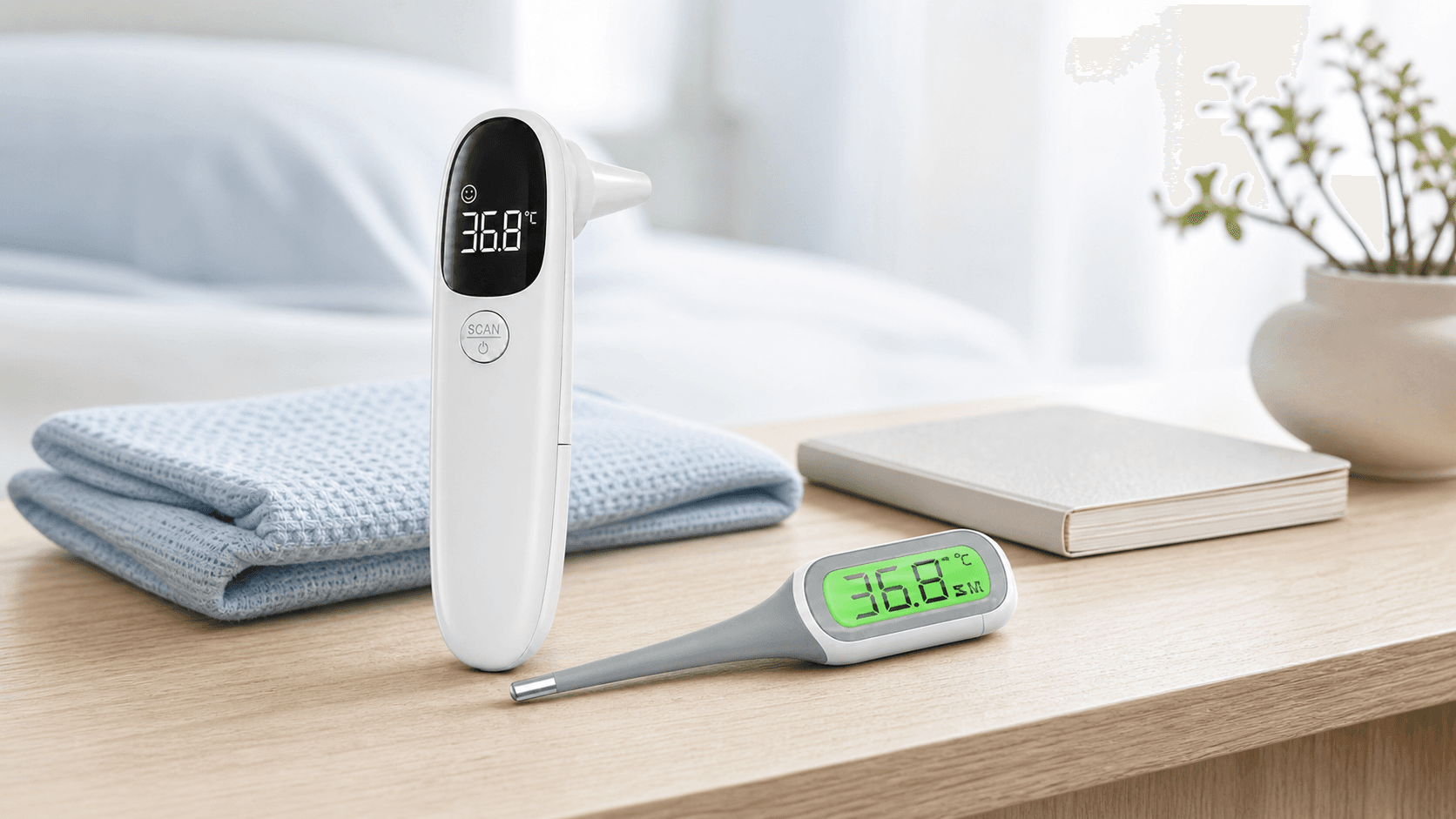
A thermometer is one of the most frequently used home healthcare tools, but different technologies are designed for different measurement routines. Infrared thermometers offer fast, low-contact measurements, while digital contact thermometers use direct contact and usually require a longer, more stable placement.
Neither format is automatically the best choice for every household. The right option depends on who will use it, how quickly a reading is needed, the measurement site, and whether the user can follow the operating instructions consistently.
01
How Infrared Thermometers Work
Infrared thermometers estimate temperature by detecting infrared energy emitted from the forehead, ear canal, or another specified measurement site. The sensor converts that energy into a displayed temperature according to the device calibration and selected mode.
Their main advantage is speed. A reading can usually be taken without holding the product in place for an extended period, which can be useful for children, older adults, or repeated household checks. Results still depend on correct distance, positioning, environmental conditions, and the instructions for the specific model.
02
How Digital Contact Thermometers Work
Digital contact thermometers use an electronic sensor at the probe tip. The probe must remain in contact with the specified body site until the device indicates that the measurement is complete.
This format is compact, familiar, and easy to store. It can provide consistent results when users select the correct measurement site, maintain stable contact, and follow the same procedure each time.
03
Accuracy Depends on Method, Not Only Technology
A product label or measurement technology alone does not guarantee an accurate result. Sensor quality, calibration, measurement site, ambient temperature, recent physical activity, and user technique can all affect the reading.
For meaningful comparison, buyers should review the operating range, stated accuracy, repeatability, measurement mode, applicable test documents, and instructions for use for the exact model. A single reading should not replace professional medical advice when symptoms are concerning.
Middle Article Support
Comparing thermometer models for your market?
Share your target market, product type, quantity, and packaging requirements so our team can prepare the relevant model information.
Request Model Information04
Speed, Comfort, and Daily Convenience
Infrared models are generally preferred when fast screening and minimal contact are priorities. They can be convenient for families with young children or for situations where several people need to be checked in a short period.
Digital contact models are often chosen for their straightforward operation and compact form. They require more patience and cleaning between users, but many households value the familiar measurement process.
Choose Infrared When
- Fast readings and minimal contact are important.
- The user needs to measure a sleeping child or an older adult with minimal disturbance.
- The household can follow positioning and environmental instructions carefully.
Choose Digital Contact When
- A simple, compact backup thermometer is required.
- The user is comfortable maintaining contact for the full measurement cycle.
- A consistent measurement site and routine can be used each time.
05
Common Factors That Can Distort a Reading
Moving directly from a very hot or cold environment, measuring immediately after exercise or bathing, using the wrong device mode, or placing the sensor incorrectly can produce inconsistent results.
For infrared models, keep the sensor window clean and use the recommended distance and angle. For digital contact models, place the probe correctly, keep it stable, and clean it according to the product instructions.
06
What B2B Buyers Should Compare
Distributors and private-label buyers should compare more than appearance and unit price. Product specifications, display readability, battery format, memory functions, packaging options, instruction languages, available test documents, and quality-control procedures should be reviewed by model.
OEM or ODM requirements should also be confirmed before artwork begins. Logo position, product color, packaging, accessories, order quantity, lead time, and compliance scope may differ between models and destination markets.
07
A Practical Home Selection Checklist
Choose the measurement method the household can use correctly and repeatedly. Consider the age of the users, preferred measurement site, required speed, cleaning routine, display size, storage, and whether more than one thermometer type would be useful.
Whichever format is selected, read the model-specific instructions before use, repeat unusual readings with the same method, and seek professional healthcare guidance when a reading or symptom causes concern.
Summary
Infrared thermometers are well suited to fast, convenient measurements, while digital contact thermometers offer a familiar and compact measurement method. The better choice is the one that matches the user, measurement site, and daily routine.
For product sourcing, compare verified model documents and sample performance rather than relying on technology labels alone. AXDCARE can provide model-specific information and OEM/ODM options for buyer review before quotation.
Frequently Asked Questions
Buyer Questions
Is an infrared thermometer more accurate than a digital thermometer?+
Not automatically. Accuracy depends on the product, calibration, measurement site, environment, and user technique. Compare the verified specifications and instructions for the exact model.
Which thermometer is easier to use for children?+
Many families prefer infrared thermometers because readings are fast and require little or no contact. Correct positioning and the specified measurement mode remain important.
Can both thermometer types be kept at home?+
Yes. Some households use an infrared thermometer for convenient routine checks and keep a digital contact thermometer as a compact alternative. Use each device only as directed.
What should a B2B buyer verify before placing an order?+
Verify model specifications, measurement method, accuracy statement, test documents, packaging, instruction languages, quality-control process, customization scope, and destination-market requirements.
End Article Support
Discuss your thermometer sourcing project
Contact AXDCARE for product selection, private-label options, sample planning, and model-specific documentation.
Request a QuoteRelated Reading