Industry News · Product Guides
Upper Arm vs Wrist Blood Pressure Monitor: Which Format Fits Your Sales Channel?
Compare upper-arm vs wrist blood pressure monitor formats for distributor channel planning, product education, packaging review, and sourcing discussions.
Preface
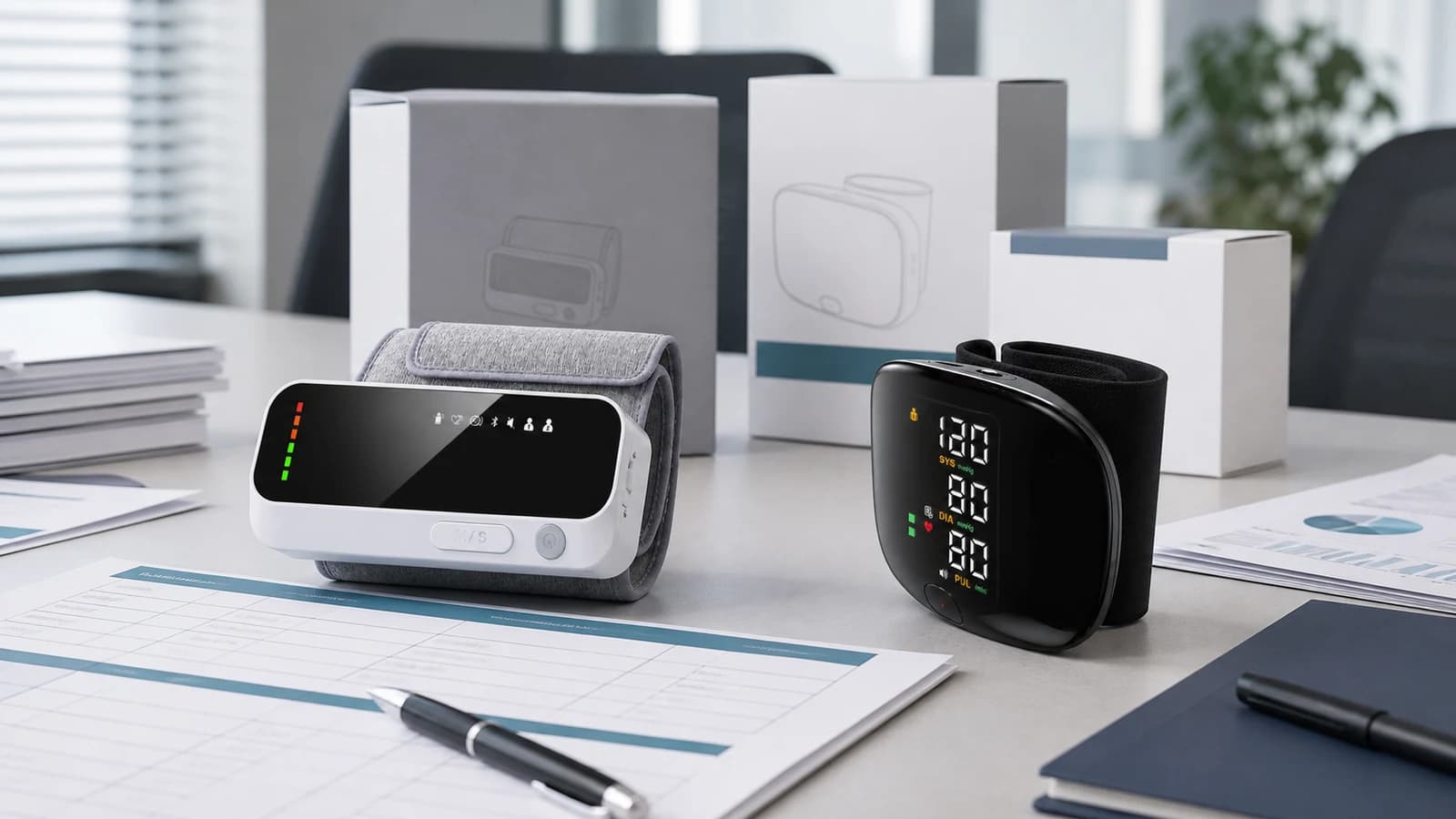
Searchers comparing an upper arm vs wrist blood pressure monitor usually want a practical answer: which format is easier to position, explain, and sell for their intended users? For B2B buyers, the decision is not only about the product shape. It affects channel fit, sales education, packaging, manuals, and the way a distributor structures a sourcing discussion.
This article is written for importers, distributors, pharmacy channels, e-commerce healthcare brands, and private-label buyers. It is not medical advice. End-user measurement decisions should follow product instructions and qualified healthcare guidance where applicable.
01
Answer the format question first
An upper-arm blood pressure monitor is typically positioned around cuff placement on the upper arm. A wrist blood pressure monitor is positioned around a smaller, wrist-based format. Public health education sources often emphasize correct positioning and measurement technique, especially for wrist devices, so B2B content should avoid oversimplified claims that one format is automatically right for every user.
For distributors, a more useful comparison starts with channel expectations. A pharmacy or clinical-adjacent channel may value familiar upper-arm presentation and clear cuff education. A compact retail or e-commerce channel may be interested in wrist-format convenience, package size, and simple product explanation. The right sales mix depends on the buyer's market, instructions, after-sales support model, and confirmed product range.
02
Channel fit affects more than product size
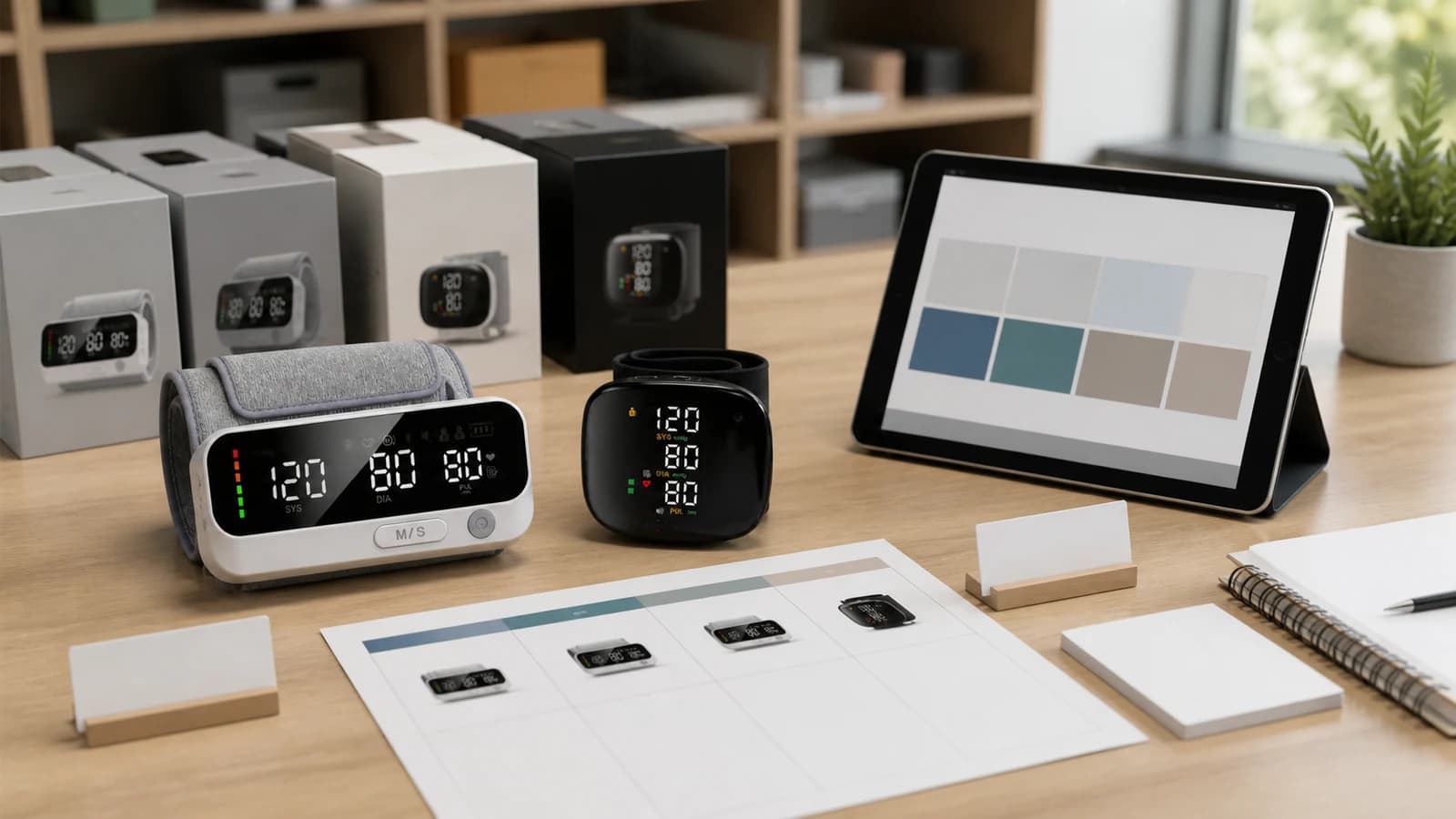
A distributor choosing between upper-arm and wrist formats should review how the product will be explained after purchase. The sales page, package panel, manual, and customer-support script should all describe the format clearly and consistently.
For upper-arm models, buyers often need strong visuals around cuff placement, product display, and package contents. For wrist models, buyers need clear positioning language, compact package planning, and careful instructions that do not turn convenience into an unsupported accuracy claim.
AXDCARE's current product structure includes blood pressure monitor categories and published upper-arm and wrist product records. Specific model parameters, package contents, and documentation should still be confirmed for the exact model/project before quotation or artwork approval.
Middle Article Support
Compare Format Options For Your Channel
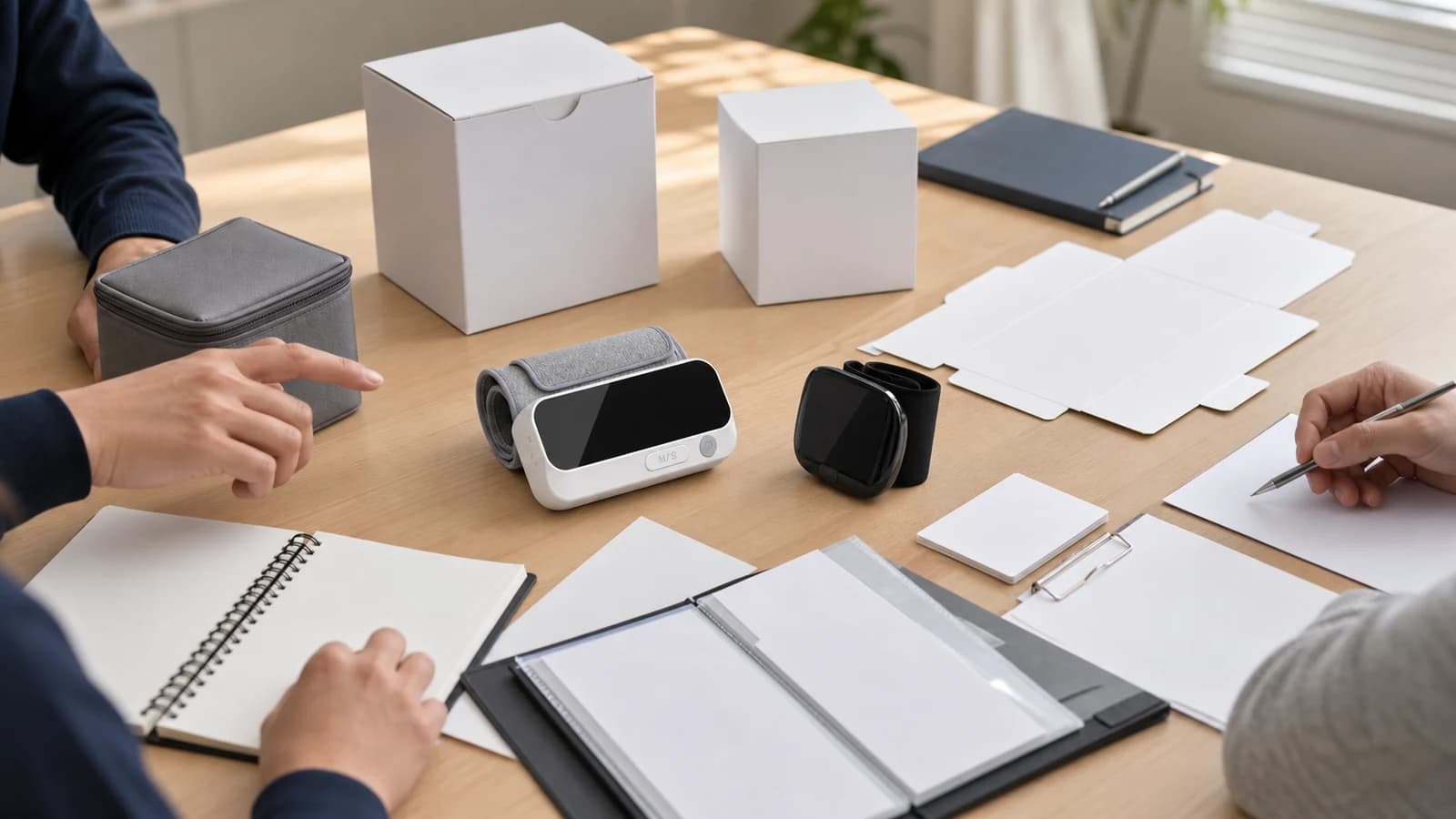
Share your target channel, product format preference, package language, and documentation needs so AXDCARE can review the suitable model/project scope.
Contact AXDCARE03
Use product education as a sourcing tool
A comparison article should help the buyer ask better questions. Instead of asking only for a price list, a distributor can ask how each format is presented in product photos, manuals, packaging, and channel materials.
Useful review points include the exact model reference, cuff or wrist-unit presentation, manual language, display-image requirements, accessory and package-content confirmation, destination-market document needs, and whether the product is intended for a branded or private-label program.
This keeps the discussion focused on verified product content rather than broad claims about performance, market access, or user outcomes.
04
Avoid risky comparison language
B2B buyers may be tempted to write simple marketing phrases such as 'more accurate', 'better for everyone', or 'approved for every market'. Those claims should not be used unless supported by the exact product documentation and destination-market review.
A safer comparison explains format, channel fit, content requirements, and project questions. It can say that upper-arm and wrist monitors serve different product-positioning needs, while asking buyers to confirm the applicable documentation and instructions for the exact model.
05
How to brief AXDCARE for a format comparison
A useful inquiry should include the target channel, preferred product format, destination market, packaging language, private-label needs, product image requirements, and documentation questions.
If the buyer is comparing both upper-arm and wrist formats, the inquiry should keep each model and package configuration separate. That prevents one product image, manual, or package statement from being reused for a different configuration.
Summary
Upper-arm and wrist blood pressure monitors should be compared as product formats with different channel, education, packaging, and sourcing implications. For B2B buyers, the goal is not to force a universal winner. The goal is to build a product mix that can be explained accurately, packaged clearly, and reviewed against confirmed model documentation.
To discuss a blood pressure monitor project, contact AXDCARE with the target channel, preferred format, model questions, packaging needs, and documentation scope for review.
Related Links
Product and Sourcing Pages
Frequently Asked Questions
Buyer Questions
Is an upper-arm blood pressure monitor always better than a wrist monitor?+
Do not treat either format as automatically better for every user or channel. Buyers should compare confirmed model information, instructions, channel expectations, and product-content needs before choosing a format.
Can distributors sell both upper-arm and wrist formats?+
A distributor may review both formats if the target market, sales channel, packaging plan, and support materials justify a broader product mix. Exact model availability and documentation should be confirmed for the project.
What should be confirmed before packaging approval?+
Confirm the exact model, product image set, package contents, manual version, language requirements, and any applicable documentation for the target market.
End Article Support
Prepare A Clear Blood Pressure Monitor Inquiry
Send the model or product format under review, destination market, packaging plan, and image/documentation requirements for a focused sourcing discussion.
Start An InquiryRelated Reading