Industry News · Product Education
Alternating Air Mattress Pressure Range vs Weight Capacity: Two Different Buyer Specs
Pump pressure range and maximum user weight describe different properties of an alternating air mattress system. Learn how buyers should compare them.
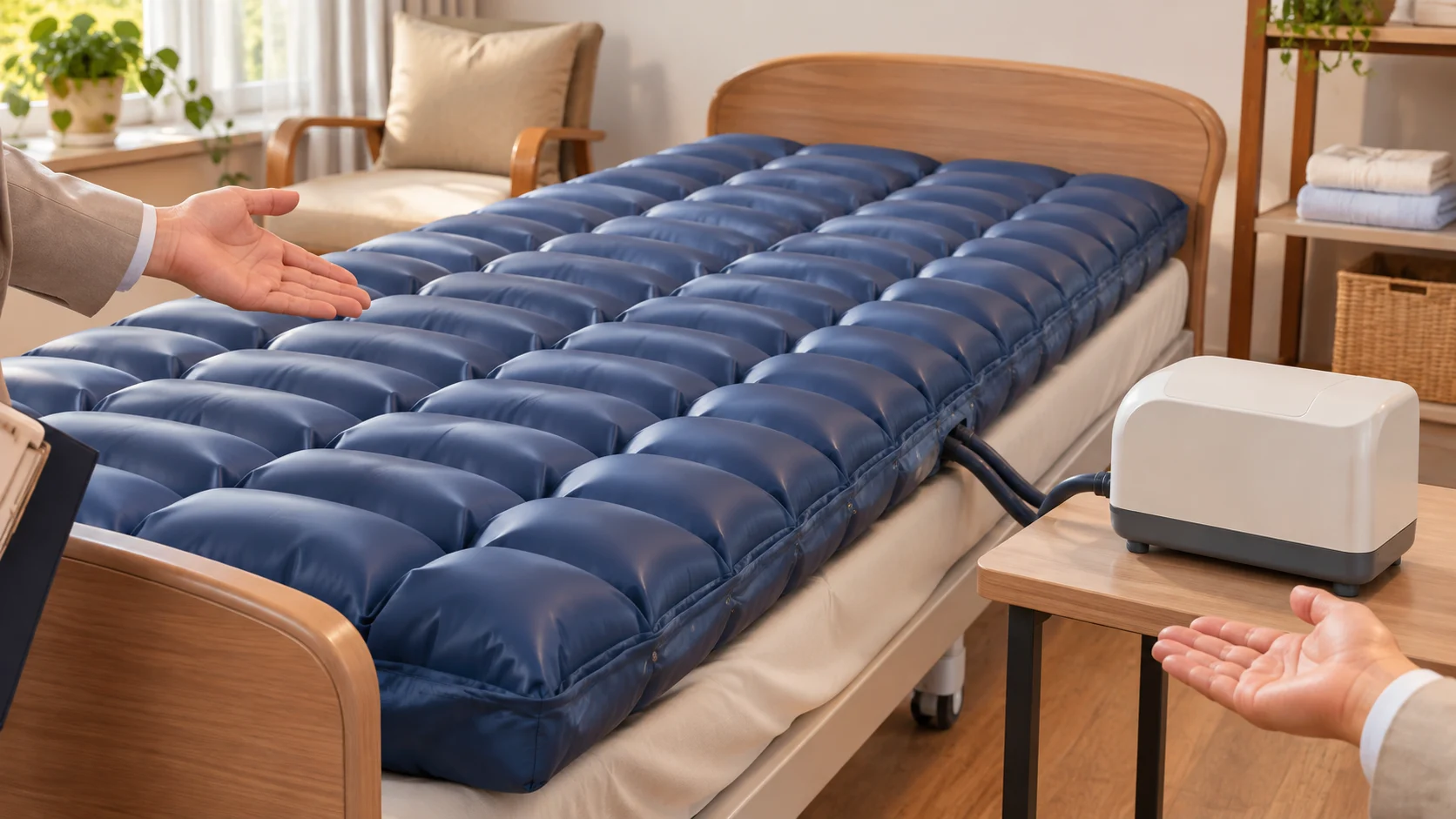
Pressure range is not weight capacity. An alternating air mattress pump may state a range of air pressures it can produce or regulate, while a maximum user-weight value describes the load allowed for a particular complete mattress system. They answer different buyer questions and are normally expressed in different units. A pressure figure cannot be converted into a safe patient-weight limit.
This distinction is useful to homecare distributors and institutional procurement teams because product tables often place pump and mattress specifications together. Reading them as one performance ranking can lead to an unsupported suitability claim. The responsible comparison identifies which figure belongs to the pump, which belongs to the mattress, and which ordered configuration was tested.
01
What the two specifications actually describe
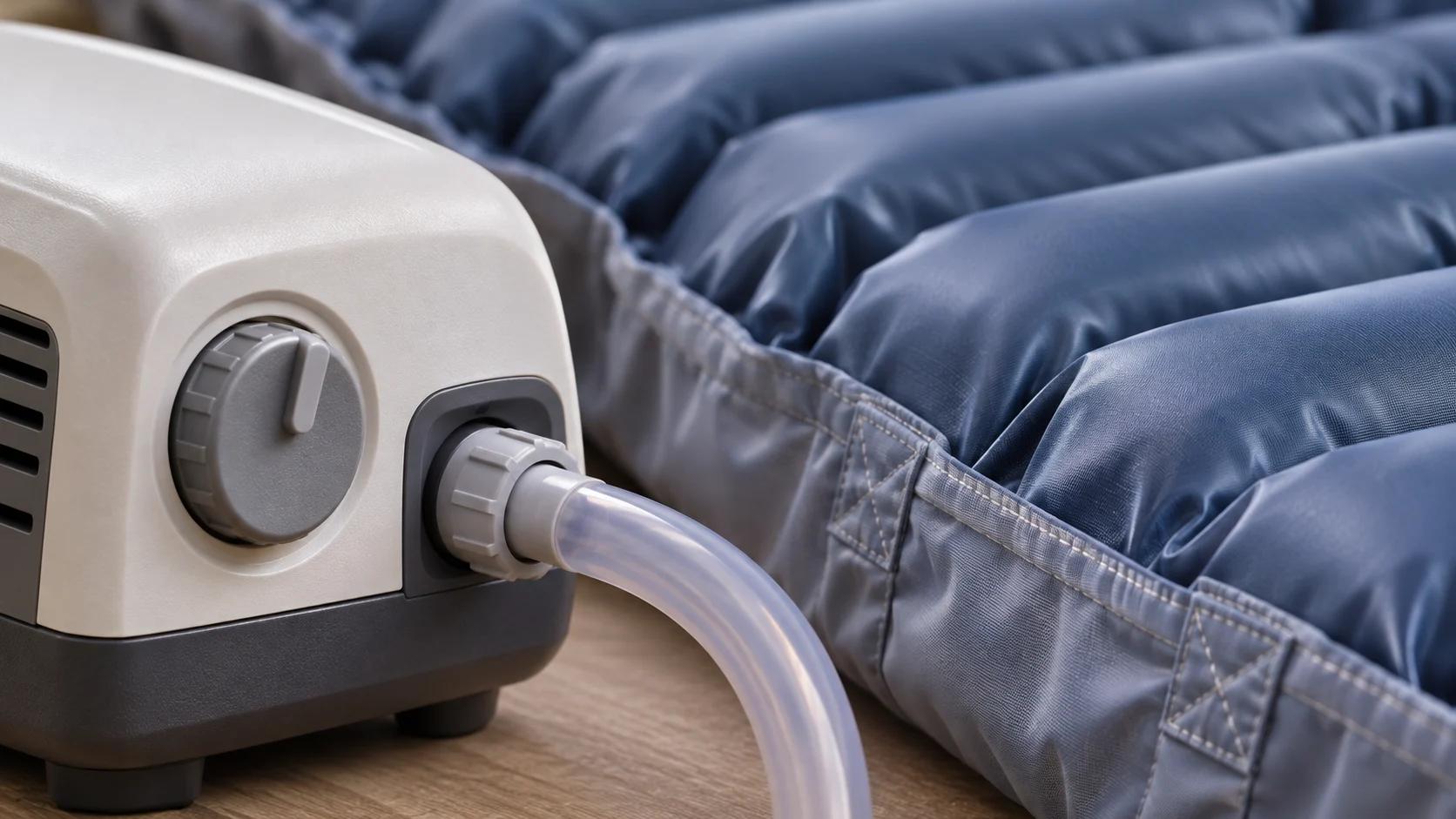
A pressure range describes an air-system measurement or setting. Depending on the equipment, it may relate to pump output or controlled cell pressure under stated conditions. The label alone does not tell a buyer how the surface behaves under a person's body. A maximum user weight is a load rating for the specified support system. It is not the pump's weight, the pressure dial's upper number, or a therapeutic recommendation.
An original Alto pump and mattress manual lists pump pressure range, pump weight settings and mattress maximum weight capacity as separate fields. That format demonstrates the distinction; its numbers belong to Alto equipment and must not be copied into an AXDCARE listing.
| Field | Describes | Does not prove |
|---|---|---|
| Pump pressure range | An air-pressure operating or control span | Maximum supported user weight or pressure-injury outcome |
| Weight/comfort setting | A control selected within a particular system's instructions | A universal patient-weight capacity |
| Maximum user weight | A stated load limit for the specified mattress system | That a given pump pressure is clinically suitable |
A complete system may have all three fields, with different meanings.
02
Why pressure cannot be converted into a load limit
The supported load is affected by more than the pump. Air-cell geometry, mattress construction, support underneath, control behavior and the manufacturer's test method all matter. Two systems with the same nominal pressure span may use different cell structures or have different load ratings. Conversely, a higher pressure setting is not evidence that a mattress is appropriate for a heavier person.
The Kent NHS dynamic mattress service describes patient-weight and cycle settings as part of the configured system in use. It does not provide a conversion formula from air pressure to patient weight. Care teams still determine clinical suitability; procurement teams can ensure that the quoted system has the correct, current load and use information.

03
Read the AXDCARE catalog without filling a missing field
AXDCARE lists AXD-AIR101 tubular and AXD-AIR102 bubble medical air mattress systems. Their current product pages show pump pressure ranges but do not state a patient-weight limit for either ordered configuration. A buyer therefore cannot turn the pressure field into a capacity claim or infer that AIR101 and AIR102 have equal load ratings.
A useful quotation comparison keeps the pump model, mattress model, cell construction, intended bed setup and maximum-user-weight evidence in separate rows. If a weight rating is needed for a tender or product page, obtain the current specification for the exact mattress and pump combination. This is a specific missing field, not a reason to ignore the other published product facts.
04
A practical purchasing comparison
Suppose two offers both list an adjustable pump and a pressure range. One also lists a verified maximum user weight for the quoted mattress, while the other does not. The first can be screened against the tender's load requirement; the second has a missing criterion. Neither offer becomes clinically preferable merely because its pressure range is numerically larger.
Keep this question separate from physical bed fit. Flat and inflated dimensions cannot alone establish frame compatibility. Load rating, bed fit and care assessment each need their own evidence. That separation gives a distributor a clearer product page and avoids pretending one specification answers all three questions.

Summary
Pump pressure range and maximum user weight are separate specifications for different parts of an alternating mattress system. Compare them as separate fields, and use a verified load rating for the exact ordered configuration before making a suitability statement.
Related Links
Product and Sourcing Pages
End Article Support
Compare a medical air mattress configuration
Tell our team which mattress, pump and intended sales channel you are evaluating so we can discuss the available model information and missing specification fields.
Contact AXDCARERelated Reading