Industry News · Product Education
Infrared Thermometer Body Mode vs Object Mode: Why the Readings Are Not Interchangeable
Body and object modes on an infrared thermometer serve different measurement tasks. Learn what each reading means and how buyers can explain the distinction.
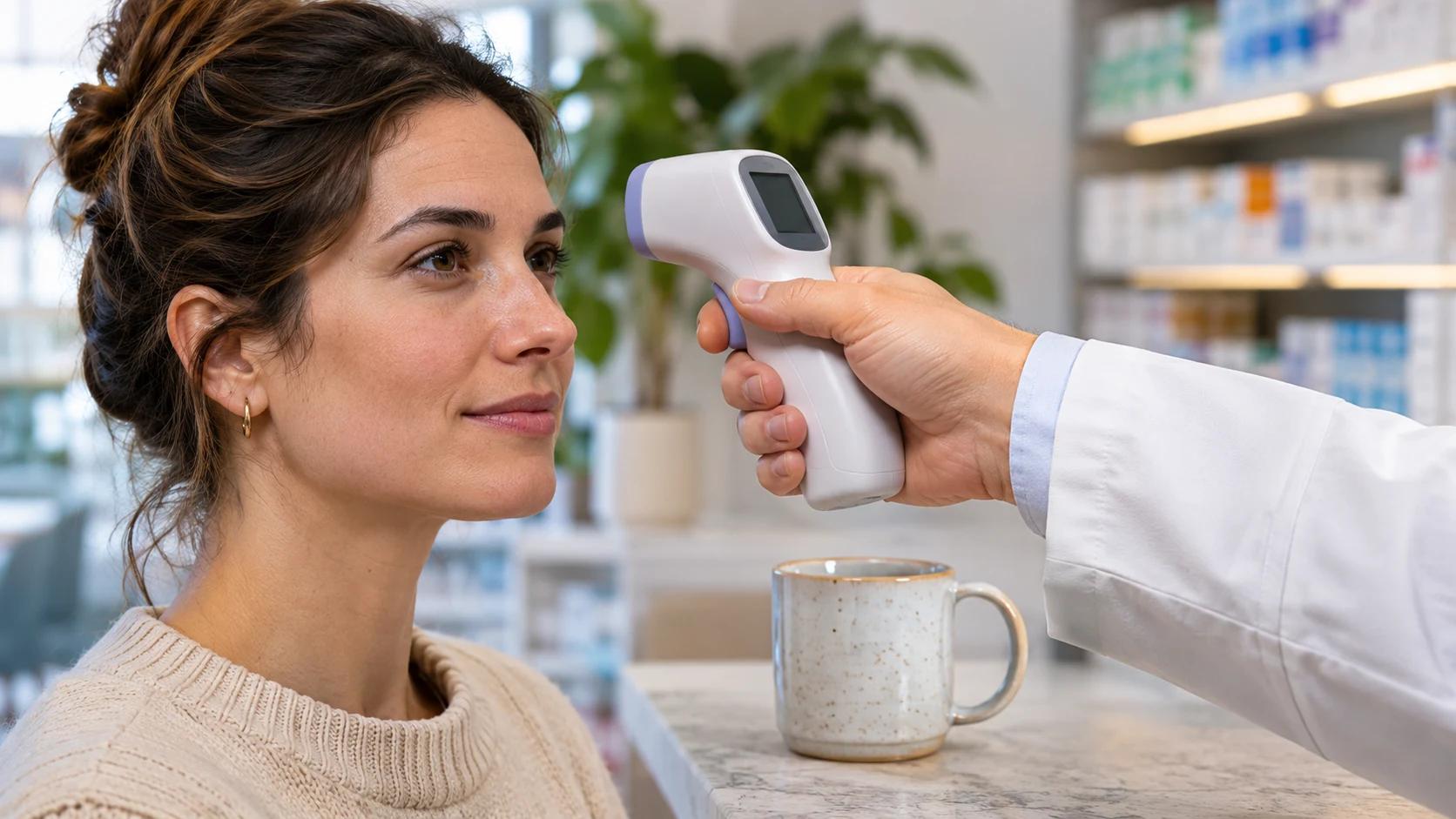
Body mode and object mode do not report interchangeable temperatures. On devices that offer both, body or forehead mode is intended to estimate a human temperature according to the device's design, while object or surface mode reports a surface measurement for a non-human target. A number taken in object mode should not be presented as a person's body-temperature result.
This distinction matters when an importer or pharmacy brand writes a product listing, trains staff, or compares infrared thermometer samples. It is a category explanation, not a claim that every AXDCARE infrared model has both modes; mode availability and button steps belong to the exact model's current instructions.
01
What each mode is designed to report
An infrared sensor detects radiation from the target surface. What the displayed number represents depends on the device's processing and selected mode. The FDA description of one dual-mode thermometer distinguishes a direct surface mode from a body mode that adjusts a forehead measurement to an equivalent body-site value. That is an example of a specific device's design, not a universal algorithm or an AXDCARE specification.
The important buyer distinction is the intended target. A body-mode result belongs to the device's stated human measurement method and reference site. Object mode may help measure the surface of an item within its stated range, but it is not a shortcut to clinical body measurement. Some infrared thermometers have only one mode; names such as object, surface or room also vary by manufacturer.
| Question | Body or forehead mode | Object or surface mode |
|---|---|---|
| Target | Human measurement site defined by the device | Non-human surface or object defined by the device |
| Displayed value | Device-specific adjusted or interpreted body result | Device-specific surface result |
| Buyer check | Intended use, reference site, operating conditions | Target material, range, distance and mode availability |
Mode names and output processing must be checked for the exact thermometer.
02
Why two scans can show different numbers
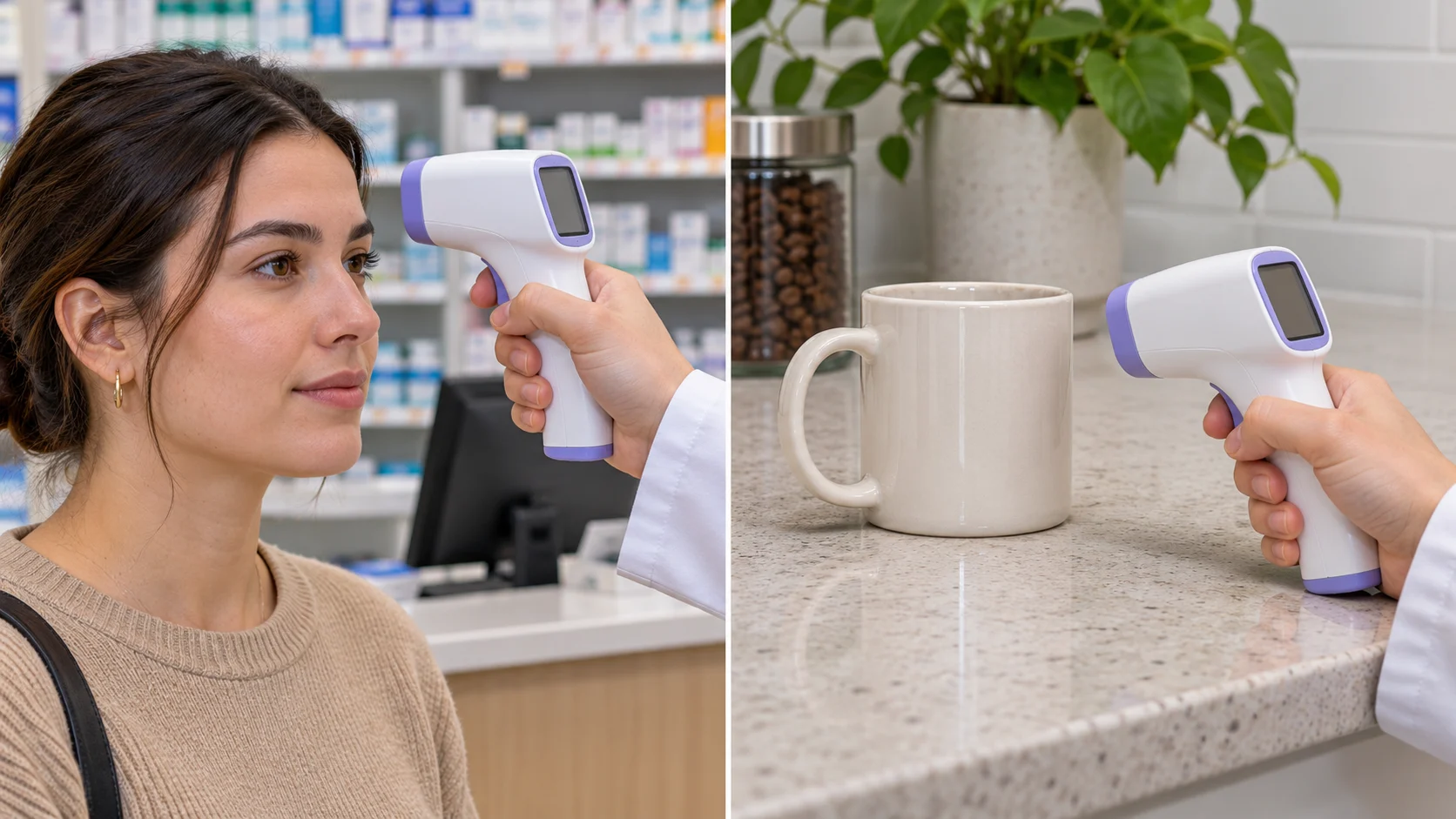
A forehead surface reading and an adjusted body-temperature result are not the same physical quantity. The adjustment, if present, is part of a particular device's design and validation. Even when the sensor sees the same area, changing modes can change the displayed result; a close numerical match does not prove that the modes are equivalent.
The FDA's NCIT guidance also identifies environment, forehead condition, distance and angle as factors in correct use. Those factors do not disappear when a mode button is pressed. A buyer comparing samples should keep the target, room conditions, mode and model constant rather than comparing one product's body reading with another product's object reading.

03
How to compare dual-mode thermometer listings
Start by checking whether the exact model actually offers two modes. Then read the intended use and measurement range for each mode separately. A technical file or product sheet may state body-mode accuracy over one interval and list object-mode availability as a separate feature; the FDA summary for another dual-mode device illustrates this separation. It does not license transplanting that accuracy figure to an AXDCARE product.
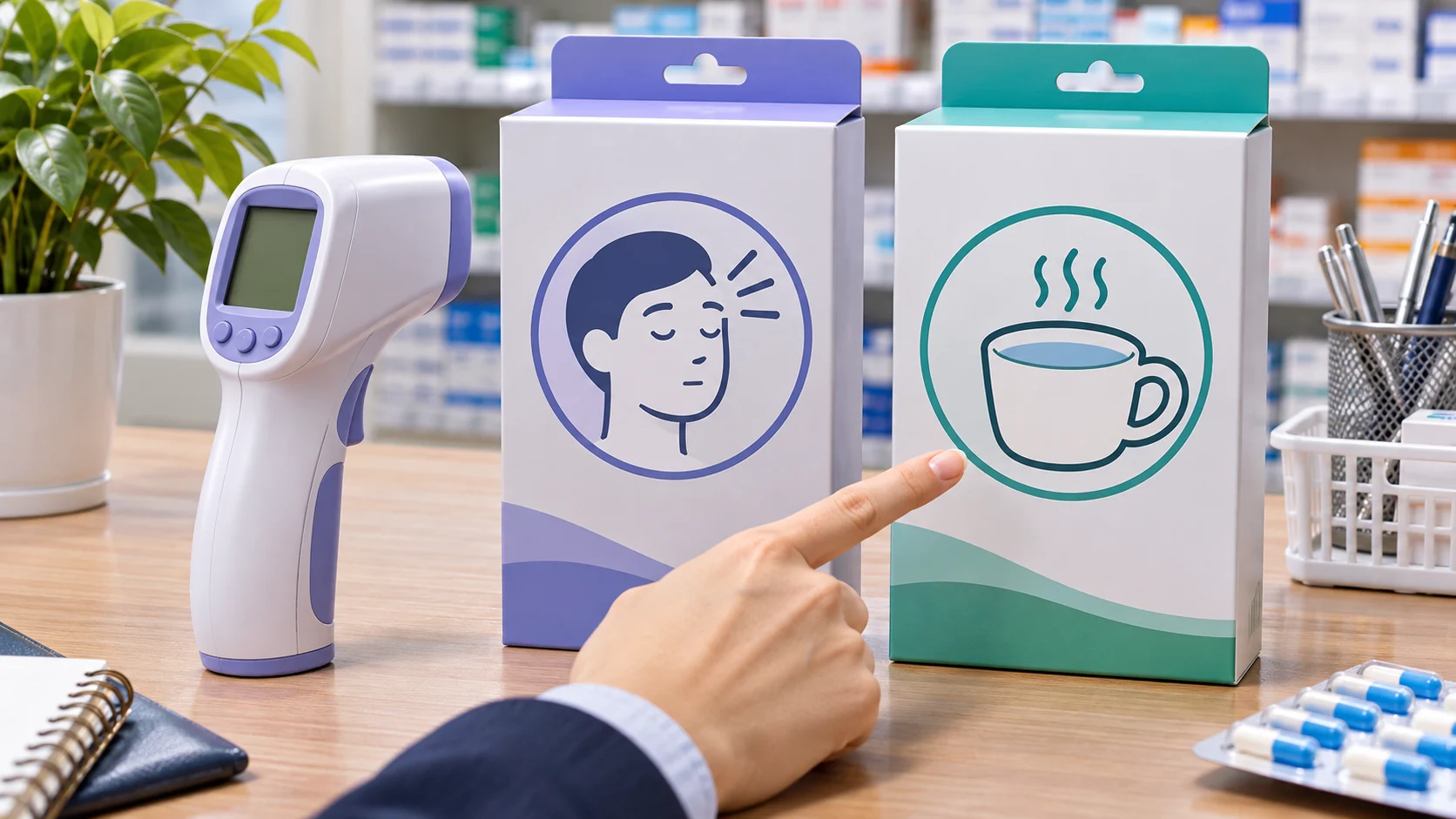
For a pharmacy listing, show the mode name next to the target it measures. A product photograph can show the physical thermometer; an explanatory visual can show a forehead and a separate object without inventing a screen icon or reading. Do not suggest that a liquid, room or food measurement is a way to assess fever.
04
Where AXDCARE's infrared range fits
AXDCARE lists infrared thermometers, including AXD-IF520 and AXD-IF521. Those product pages identify the models and category, but do not establish a body/object-mode pair for either model. A buyer can use this distinction to frame a model-specific demonstration without placing an unconfirmed mode on a sales page.
When users need a human temperature reading, the applicable instructions and clinical context matter more than a generic icon. A concerning result or symptoms call for appropriate healthcare advice, not reinterpretation of an object-mode value.
Summary
Body and object modes serve different targets and can process the sensed surface temperature differently. Importers and channel teams should label each mode by its intended task, then describe only the modes and performance supported for their selected model.
Related Links
Product and Sourcing Pages
End Article Support
Discuss an infrared thermometer range
Share the model, target market and channel education needs so our team can review the available product information with you.
Contact AXDCARERelated Reading