Industry News · Product Guides
Compressor vs Handheld Nebulizer: What Should Distributors Stock?
Compressor vs handheld nebulizer comparison for B2B distributors: understand product positioning, channel fit, documentation review, and assortment planning.
Preface
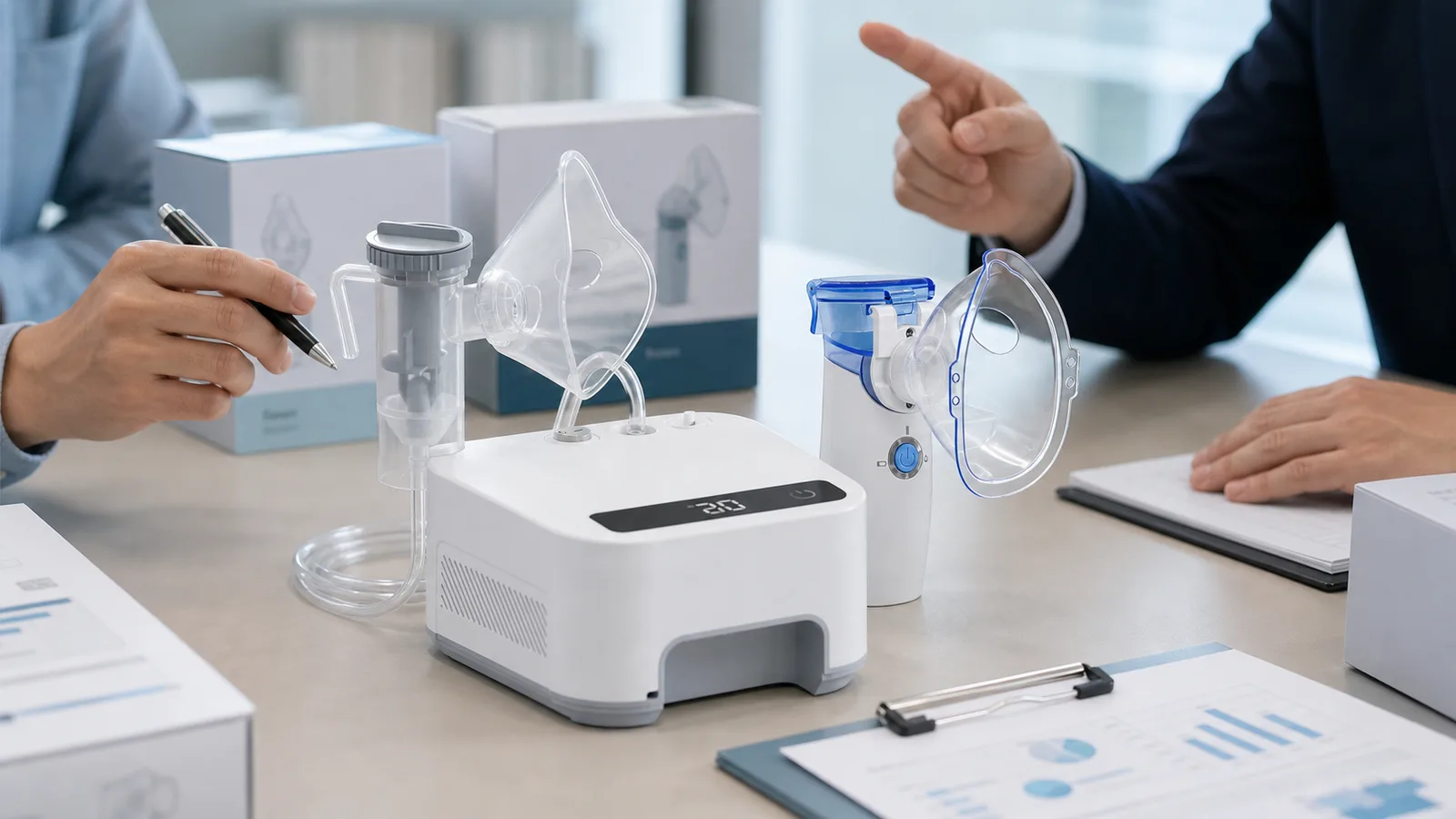
Searchers using compressor vs handheld nebulizer are usually trying to understand the difference between two product types. For B2B buyers, the question goes further: which type should be included in a distributor's product line, how should the assortment be positioned, and what documents should be reviewed before purchase?
The answer is not simply that one type is better. Compressor nebulizers and handheld nebulizers can serve different channel strategies, price positions, packaging expectations, and buyer education needs.
AXDCARE's website currently includes nebulizer categories for compressor and handheld products. Buyers should verify exact model data from the product page and confirmed product documentation before using model-specific claims in their own sales materials.
01
What Is a Compressor Nebulizer?
A compressor nebulizer typically uses a compressor unit connected with tubing and a nebulizer cup or mask. In B2B terms, this product type is often positioned as a stable home healthcare device for channels that expect a tabletop product, visible accessories, and clear packaging space for instructions.
Distributor considerations include larger retail package planning, accessory review, clear user manual review, product images that show the main unit and accessory relationship, and a sample evaluation workflow that matches the buyer's channel expectations.
For AXDCARE internal linking, buyers can review the compressor nebulizer category and confirmed product pages such as AXD-NB316 AC Compressor Nebulizer. Model-specific technical parameters should be confirmed through current AXDCARE product documentation before buyer-facing use.
02
What Is a Handheld Nebulizer?
A handheld nebulizer is generally more compact and portable in appearance. For distributors, the value may be in shelf efficiency, online product presentation, and a product story that is easier to explain in compact packaging.
Distributor considerations include product durability during shipping, power-related details only when confirmed by exact model data, packaging space for instructions and warnings, replacement or accessory expectations by channel, and visual differentiation from compressor nebulizer products.
AXDCARE's current product data includes handheld nebulizer category records. Buyers should confirm exact model availability, features, and documentation before building sales copy around a specific handheld model.
03
Compressor vs Handheld Nebulizer Stocking Logic
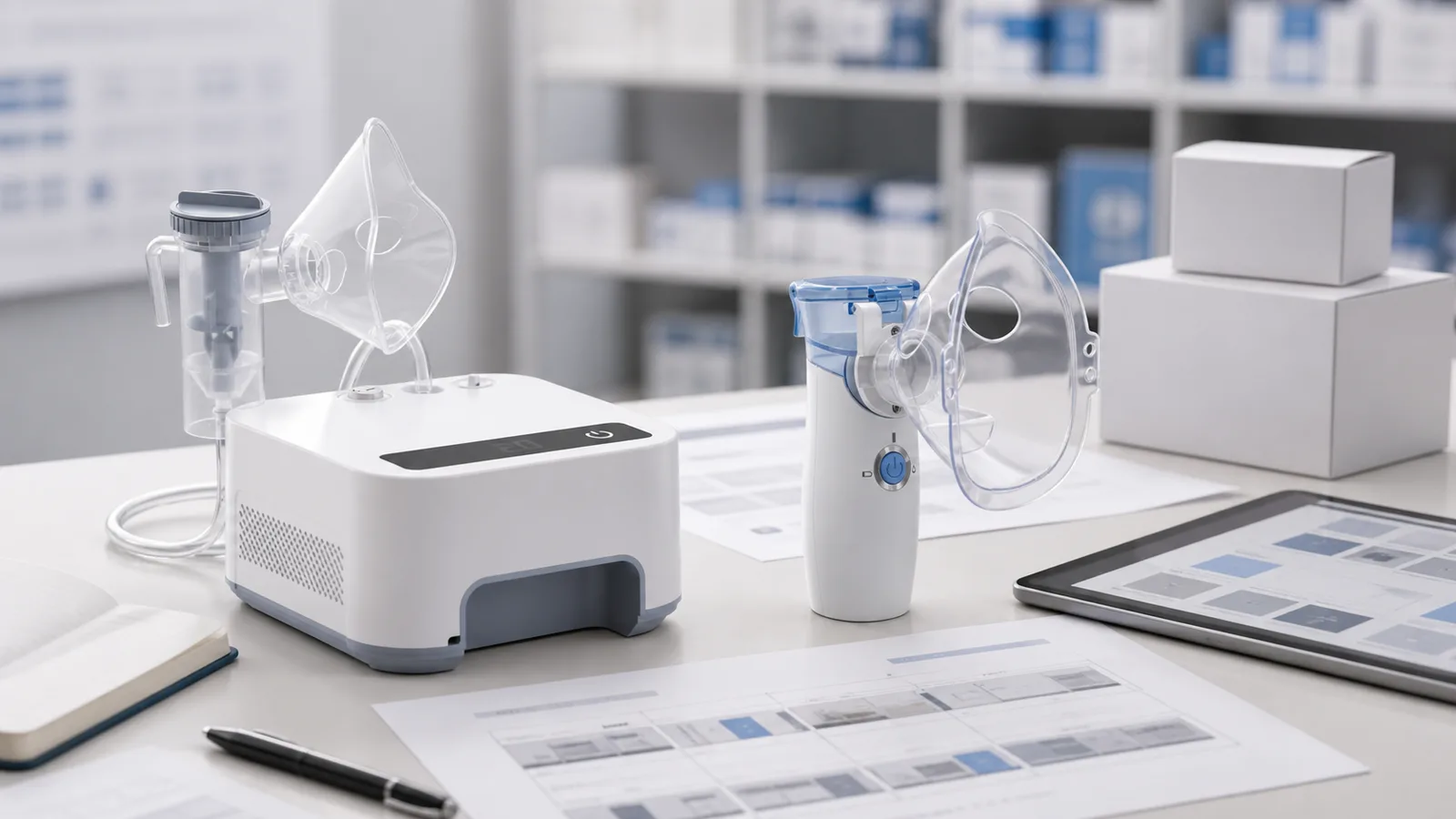
For B2B assortment planning, compare the two types by channel fit rather than by generic claims. Compressor nebulizers may fit buyers that need a visible tabletop product, a category anchor SKU, and a product package that can present accessories clearly.
Handheld nebulizers may fit buyers that need a compact product format for online channels or space-limited retail shelves, or a lighter assortment extension after compressor models are already established.
Many distributors choose not to treat this as an either-or decision. A balanced product line may include a compressor nebulizer as a core SKU and a handheld nebulizer as an additional channel-specific option.
Middle Article Support
Planning a nebulizer assortment?
Share your sales channel, target product type, package needs, and document checklist so AXDCARE can review compressor and handheld nebulizer options.
Request Assortment Review04
Documentation and Compliance Review
Nebulizers are medical devices in many markets, so buyers should handle documentation carefully. In the United States, the FDA product classification database includes entries for nebulizer product categories, and the eCFR describes nebulizers in 21 CFR 868.5630.
These sources are useful regulatory background. Certification and market-entry requirements vary by product model and destination market. Buyers should confirm the applicable documentation with the AXDCARE team for the exact nebulizer model under review, including destination market, labeling version, package configuration, and accessory set being quoted.
Do not treat a certificate, test report, or registration document as a blanket claim for every model. The document scope matters.
05
Accessory and Packaging Review
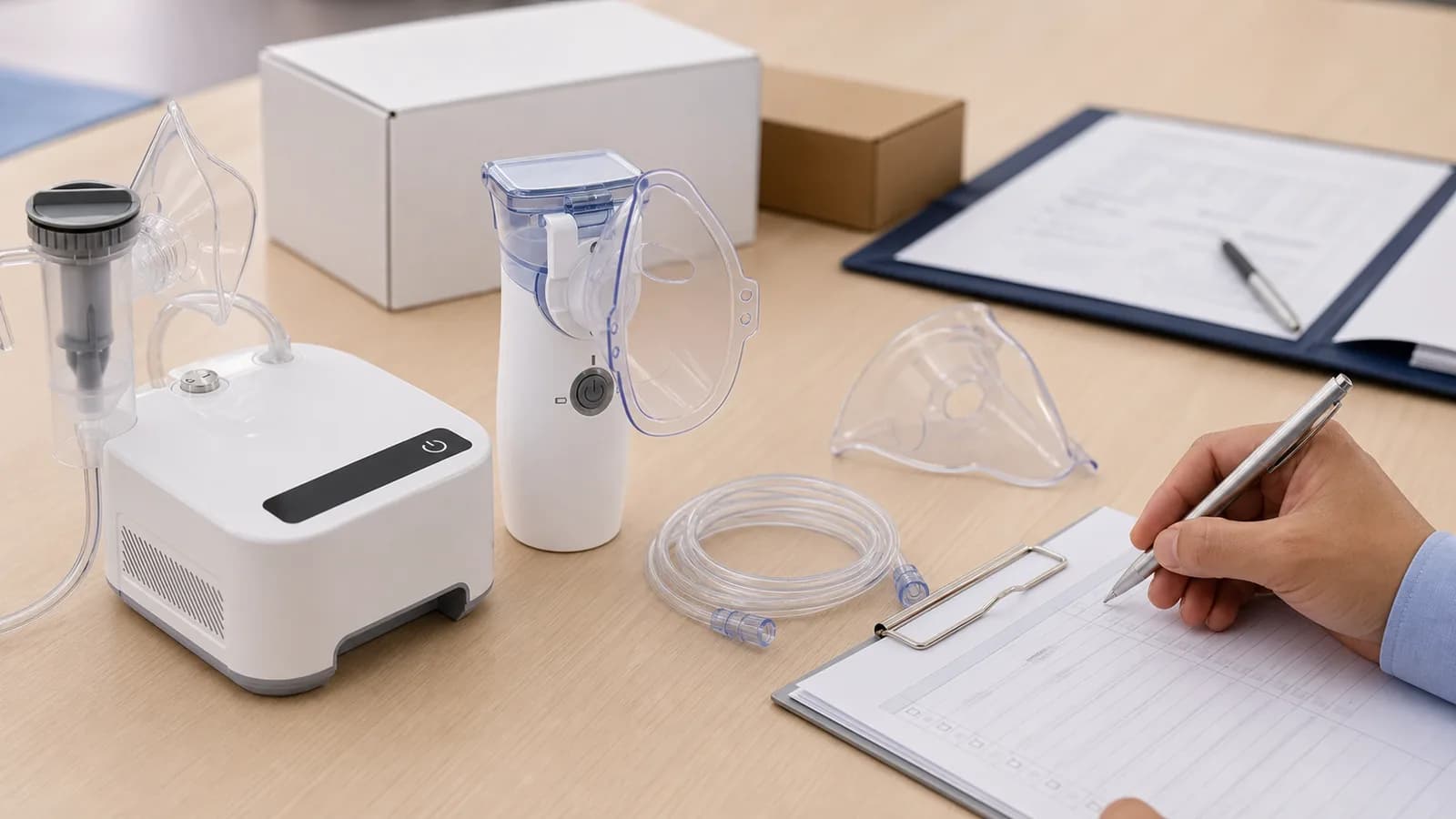
Accessory configuration can create confusion if it is not controlled early. A distributor should confirm what is included in the package and how each item is presented in the manual and product image set.
Useful review points include main unit appearance, mask and tubing configuration for compressor models, mask or mouthpiece configuration for handheld models if applicable and confirmed, package artwork, manual language, carton requirements, barcode requirements, and product image sets for online catalog use.
This review should happen before final artwork or purchase order confirmation. Changing accessories after packaging design begins can cause delays and inconsistency.
06
How AXDCARE Buyers Can Start
Buyers building a nebulizer assortment can start from AXDCARE's nebulizer category pages, including Nebulizers, Compressor Nebulizers, and Handheld Nebulizers.
Current product pages such as AXD-NB316 AC Compressor Nebulizer and AXD-NB31 Handheld Nebulizer can be used as starting points for model review. Buyers should confirm exact specifications and documentation through the official inquiry workflow.
For most B2B buyers, the best first step is to define the channel role of each nebulizer type before asking for quotations.
07
Reference Sources
FDA Product Classification Database, Nebulizer direct patient interface product code CAF: https://www.accessdata.fda.gov/scripts/cdrh/cfdocs/cfPCD/classification.cfm?id=CAF
eCFR 21 CFR 868.5630 nebulizer: https://www.ecfr.gov/current/title-21/chapter-I/subchapter-H/part-868/subpart-F/section-868.5630
Summary
Compressor and handheld nebulizers should be compared as different product-line roles, not as a simple better-or-worse decision. The right stocking plan depends on channel fit, packaging, documentation, accessory configuration, and buyer education needs.
AXDCARE buyers can use the current Contact, Get a Quote, product inquiry, WhatsApp, or catalog download entry points to request current model information and confirm documentation.
Related Links
Product and Sourcing Pages
Frequently Asked Questions
Buyer Questions
Is a compressor nebulizer better than a handheld nebulizer?+
Not universally. They can serve different product-line and channel needs. B2B buyers should compare form factor, packaging, accessory configuration, documentation, and channel fit rather than relying on a generic better label.
Should distributors stock both compressor and handheld nebulizers?+
Some distributors may benefit from both if they serve different channels or price positions. The decision should be based on demand, documentation readiness, package configuration, and product-line strategy.
Can this article be used as medical advice?+
No. This article is written for B2B product sourcing and assortment planning. Medical use questions should follow healthcare professional guidance and local regulations.
End Article Support
Discuss nebulizer sourcing with AXDCARE
Contact AXDCARE for compressor and handheld nebulizer model review, packaging discussion, documentation confirmation, and quotation preparation.
Request a QuoteRelated Reading