Industry News · Thermometer Guides
Inside a Digital Thermometer: How a Thermistor Turns Heat into a Reading
Follow a contact thermometer's measurement chain from heat and thermistor resistance to a displayed reading—and see what that means for product education.

Preface
A digital stick thermometer has no liquid column to climb a scale. In a common design, a thermistor changes its electrical resistance as its temperature changes. The electronics interpret that change and present a temperature on the display.
Following that chain makes a compact product much easier to explain. For pharmacy and private-label teams, it separates the sensing principle from the probe's physical design and from claims about the finished thermometer.
01
What changes at the sensing tip?
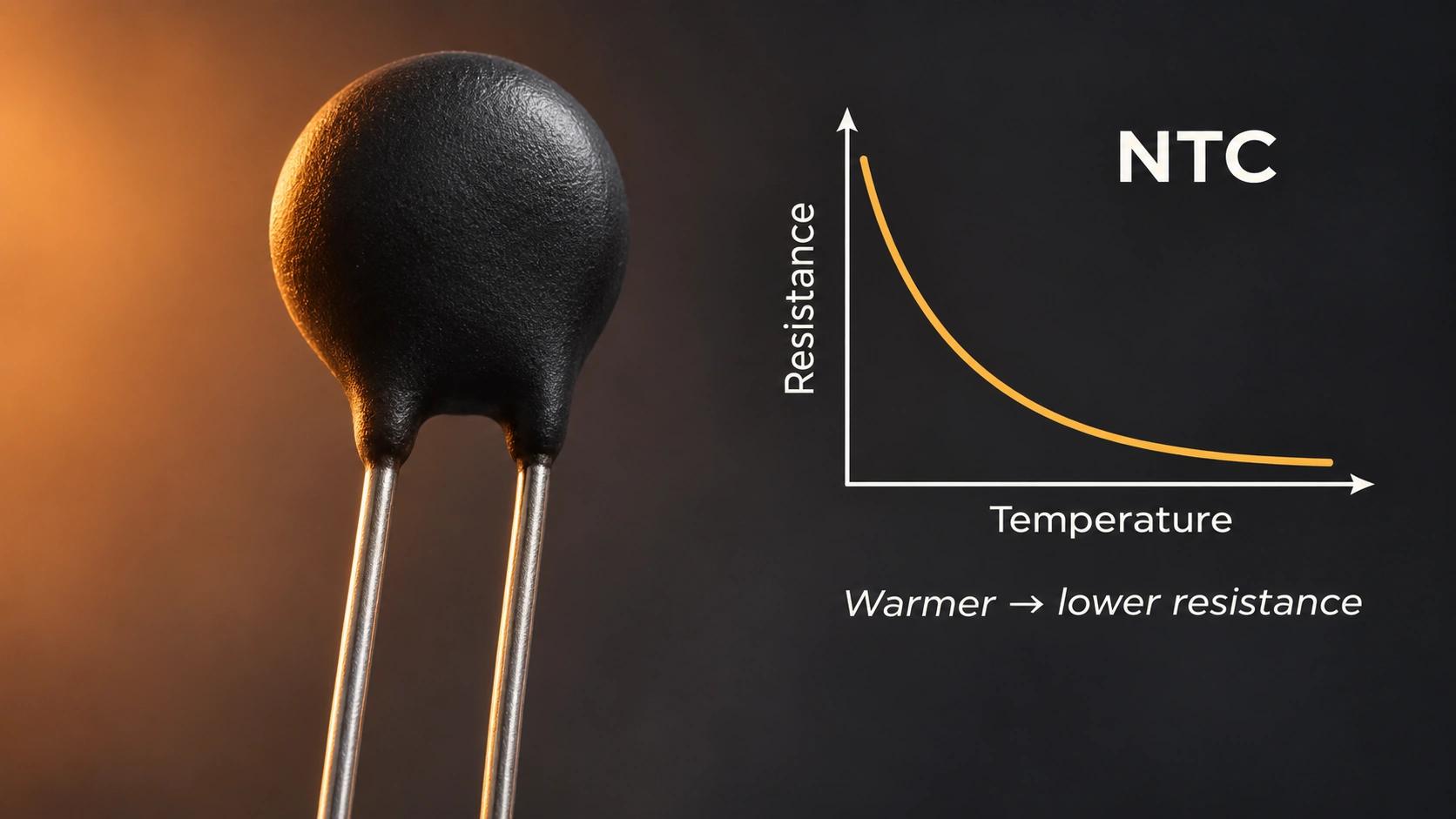
The sensing element responds to its own temperature. In an NTC thermistor, resistance falls as temperature rises over the intended operating range. “NTC” means negative temperature coefficient; it describes that direction of change, not a feature selected by pressing a button.
Murata's component explanation shows that resistance must be related to temperature through the element's characteristic. A resistance value on its own is not a temperature reading. The circuit needs the appropriate relationship to interpret it.
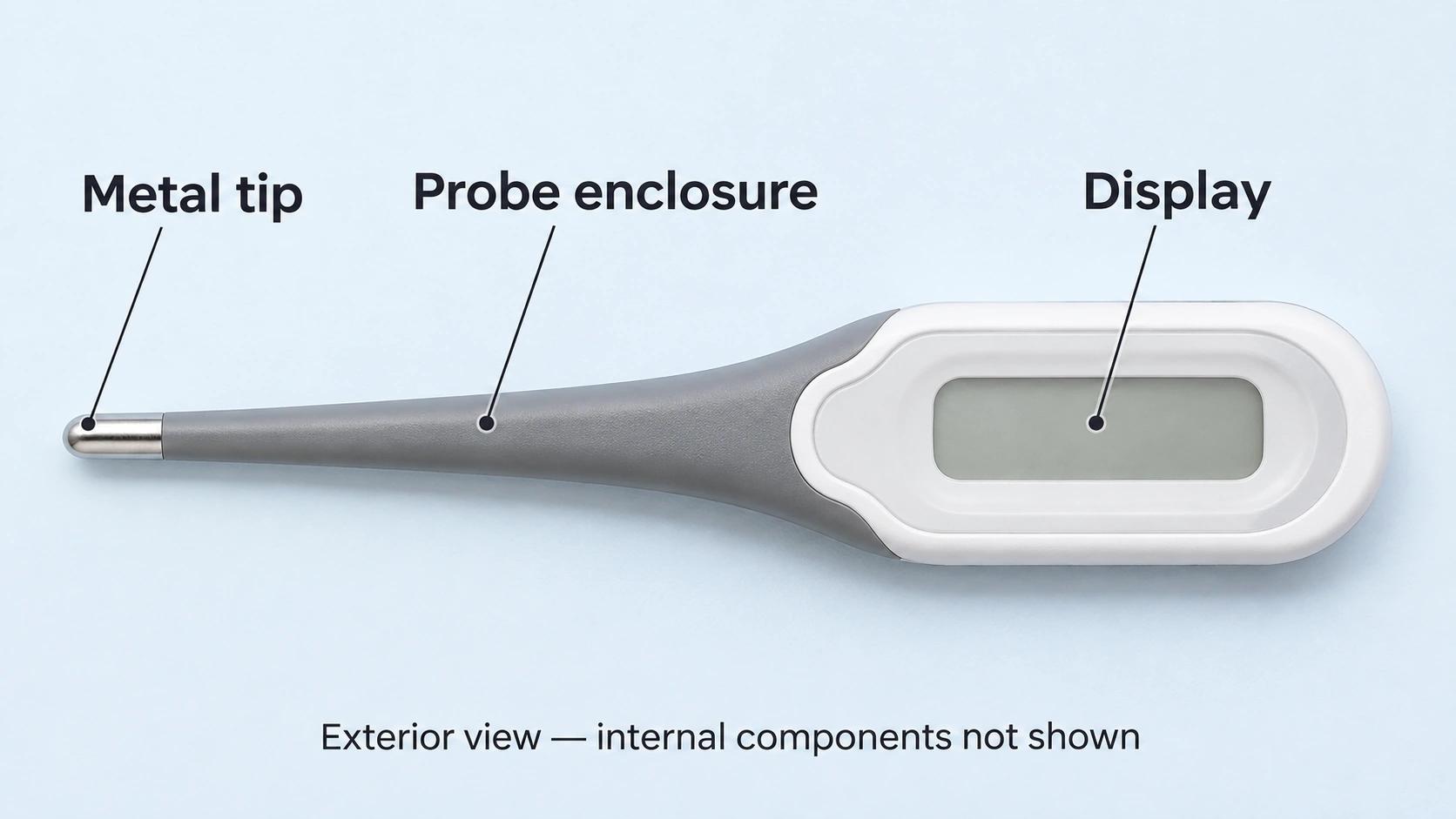
Heat must reach the sensing element through the probe structure. The visible tip is therefore not a miniature display: it is part of the physical route between the measurement site and the sensor.
02
How electronics turn that change into a number
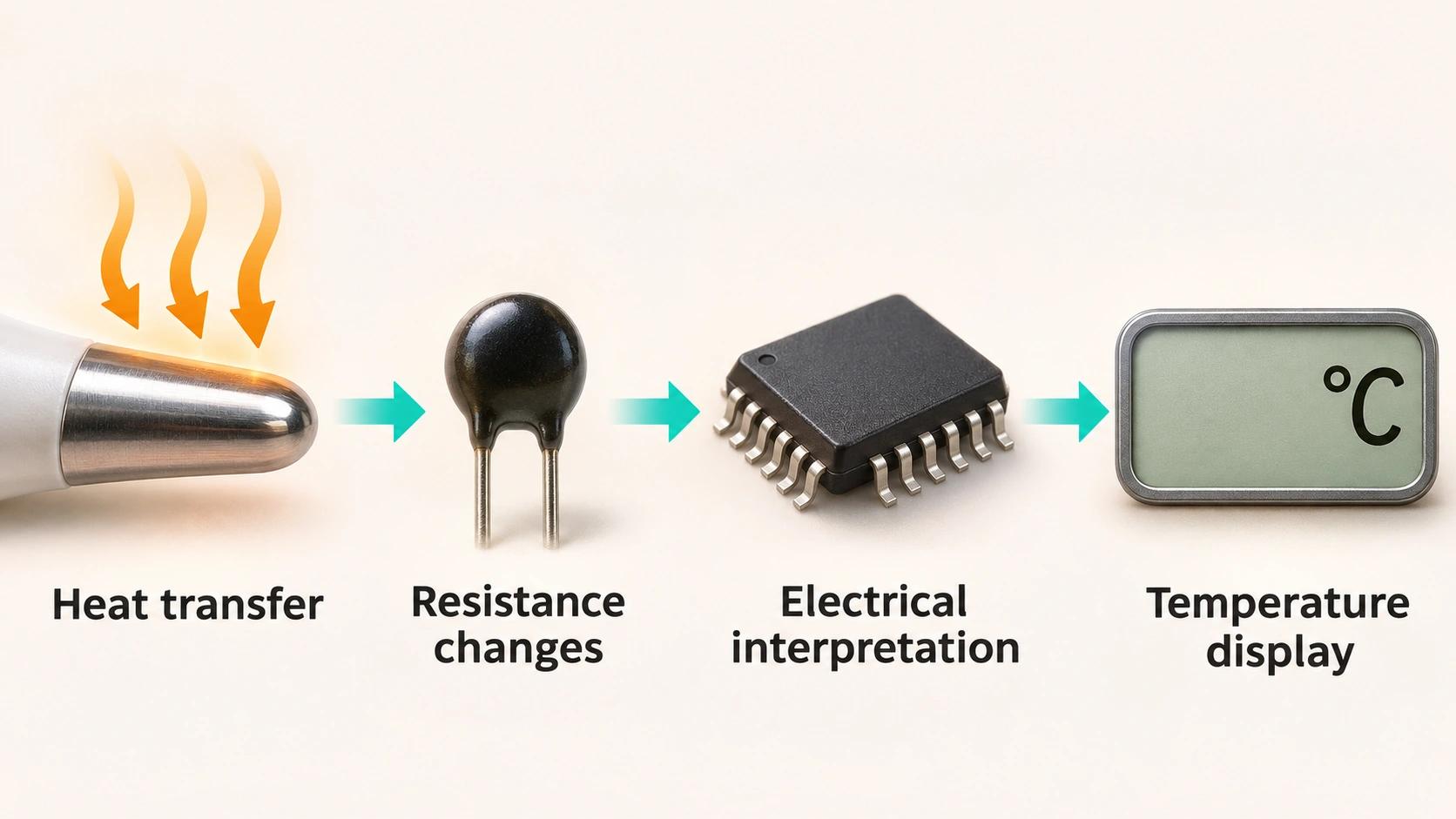
One implementation measures a thermistor-related voltage, converts the electrical signal into digital data and uses stored information to calculate temperature. The processor then drives the display. Texas Instruments' contact-thermometer example illustrates this route; some electronic functions can be integrated into the same component.
That is an example, not the only possible circuit. A SEJOY device description filed with the FDA describes a resistance-capacitance oscillator whose frequency changes with thermistor resistance. Measuring that frequency provides another route to a temperature value.
The common idea is conversion: a temperature-dependent electrical property becomes a readable number. These examples do not identify the circuitry inside an AXDCARE model.
03
Why the sensor is only part of the thermometer
A sensor does not instantly adopt a new temperature. Its response depends on heat transfer, and the surrounding construction is part of that process. A small sensing element inside a finished probe should not be treated as though it were exposed directly to the measurement environment.
The measurement circuit also needs to avoid heating the element enough to disturb what it is trying to sense. Murata discusses this self-heating effect: electrical power used in measurement can raise the sensor's temperature. This is an engineering consideration, not an instruction for users to adjust or repair a thermometer.
Sensor behavior, probe construction and electronic interpretation belong to one measurement chain. A photograph can show the exterior, but it cannot reveal the component selection or algorithm inside.
04
Turn the mechanism into useful product education
For a pharmacy explanation, start with the sequence: contact transfers heat, the sensor's resistance changes, and electronics turn that change into the displayed temperature. A short explanation of the mechanism is more useful than presenting “digital” as though it names the sensing material.
Then keep the product description specific. A flexible tip describes a physical design choice; the sensing principle describes how temperature is detected. Neither phrase establishes the finished device's approved measurement sites or operating procedure. Those remain defined by the instructions for the selected model.
Explore AXDCARE's digital thermometer range with that distinction in mind. A private-label project can communicate the principle clearly while choosing the exterior format and customer-education material appropriate to its channel.
Related Links
Product and Sourcing Pages
End Article Support
Discuss your digital thermometer range
Tell our team which product format and pharmacy or homecare channel you are planning, and what your customers need to understand about the device.
Contact AXDCARERelated Reading