Industry News · Blood Pressure Guides
Pulse Pressure Is Not Pulse Rate: What the Gap Between SYS and DIA Means
Pulse pressure is systolic minus diastolic pressure; pulse rate is beats per minute. Learn the difference and why the original blood pressure pair still matters.
Preface
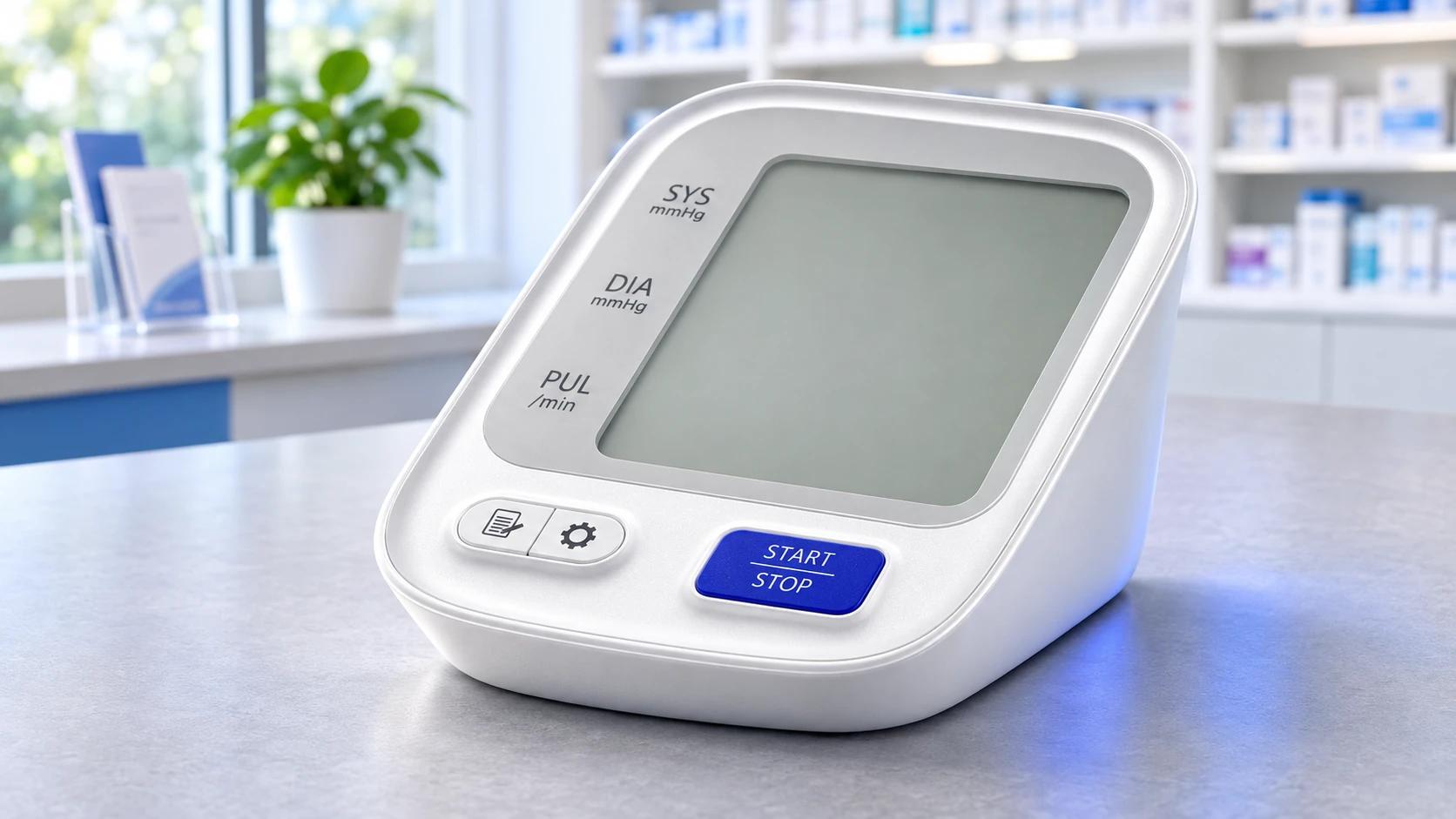
Three numbers can appear on a blood pressure monitor, but pulse pressure is not the pulse-rate number. Pulse pressure is the difference between systolic and diastolic pressure. Pulse rate describes how many beats occur per minute.
The shared word can cause an avoidable misunderstanding at a pharmacy counter or in a product description. The quickest way to separate them is to look at the calculation and the unit.
01
Pulse pressure comes from subtraction
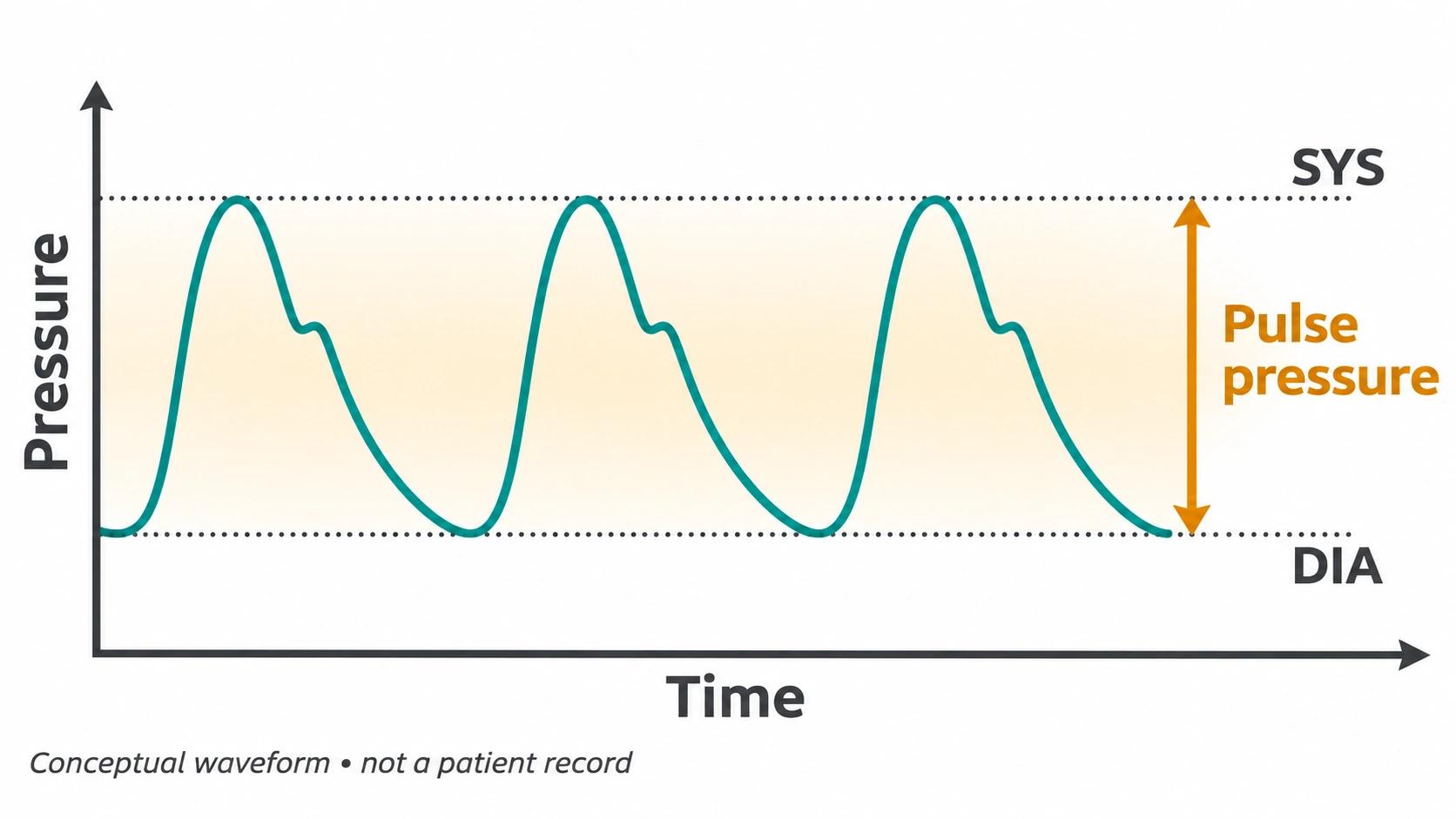
The American Heart Association's scientific statement on blood pressure measurement defines pulse pressure as systolic pressure minus diastolic pressure. If an illustrative reading is 126/78 mmHg, the subtraction is 126 − 78 = 48 mmHg.
That example is arithmetic, not a health classification or a target reading. The result remains a pressure because both numbers being subtracted are pressures in the same unit.
Pulse pressure is also different from an average. Subtraction describes the gap between the two values; averaging answers another mathematical question. Calling the gap a third independently measured blood pressure would obscure how it was obtained.
02
Pulse rate answers how often, not how far apart
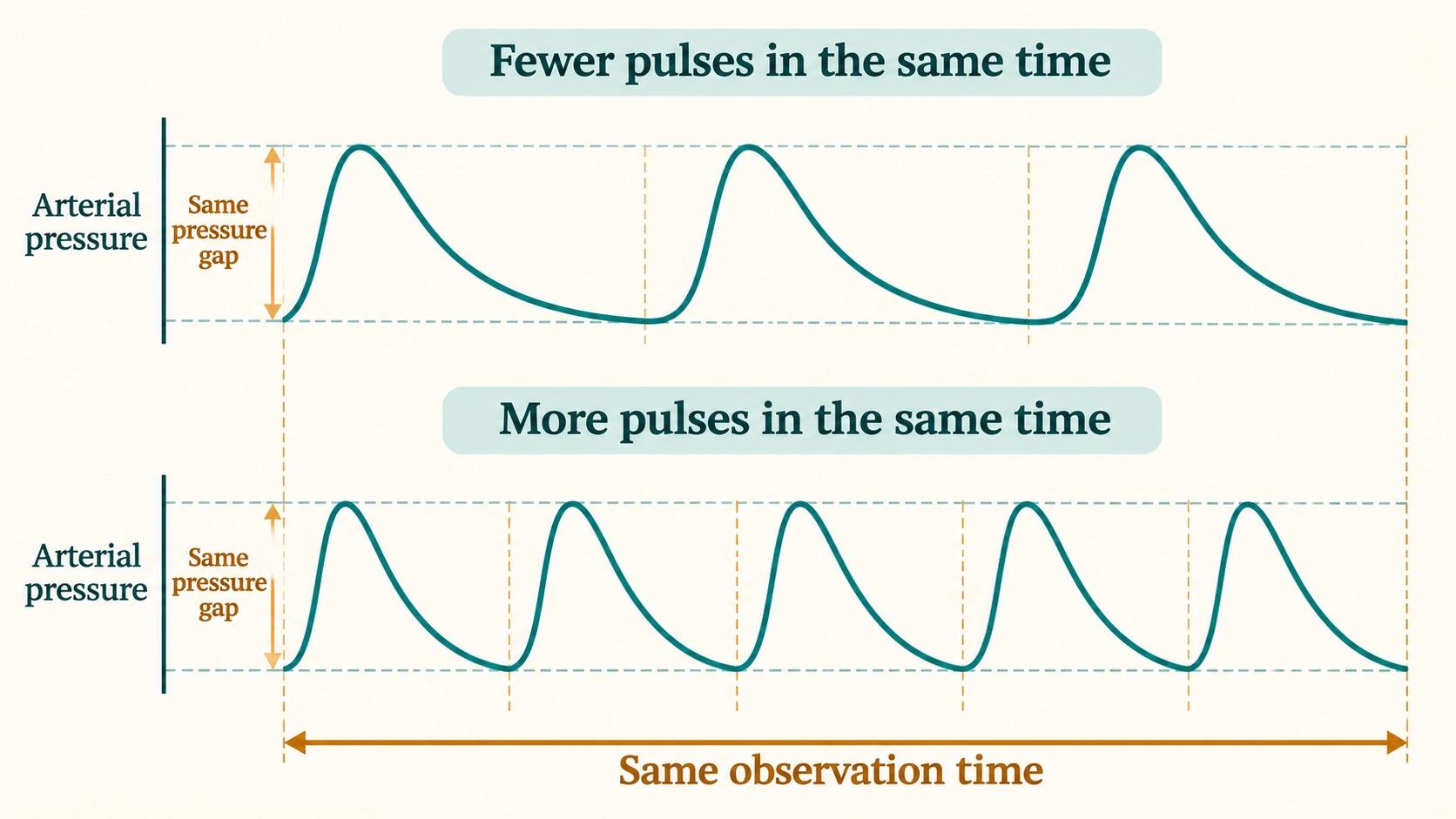
The AHA's explanation of heart rate describes a rate in beats per minute. It counts events over time. Pulse pressure instead describes the difference between two pressure levels.
Suppose an illustrative record contains 126/78 mmHg and a pulse rate of 72 bpm. The pressure difference is 48 mmHg; the rate is 72 bpm. Subtracting 72 from either pressure would mix quantities and would not calculate pulse pressure.
Even if the numerical values happened to match, the units would still distinguish them. A value of 48 mmHg and a rate of 48 bpm do not describe the same measurement.
03
Keep SYS and DIA beside the calculated gap
A calculated difference does not preserve all the information in the original pair. For example, 126 − 78 and 146 − 98 both equal 48. Those hypothetical pairs share an arithmetic gap, but their systolic and diastolic values differ.
Consequently, a record or educational example should keep SYS and DIA visible alongside any derived difference. Do not replace the original pair with the gap, and do not present equal pulse pressures as proof that two readings have the same clinical meaning.
Interpreting a person's measurements belongs with their healthcare professional. This distinction explains the quantities; it does not provide a diagnostic threshold, a treatment decision or a reason to alter medication.

04
Make the distinction clear at the pharmacy counter
A concise staff explanation is: “The pulse number is a rate per minute. Pulse pressure is calculated from the difference between your systolic and diastolic pressures.” If a customer is asking about their own health, separate that definition from the clinical discussion.
For product pages, label outputs by what they actually describe. Do not rename a pulse-rate field “pulse pressure,” and do not imply that an AXDCARE monitor automatically calculates or displays pulse pressure unless that feature is documented for the selected model.
When reviewing the blood pressure monitor range, a distributor can use this distinction to brief its retail team and avoid ambiguous field labels. The useful outcome is a clearer explanation of the device's information—not another unsupported feature claim.
Related Links
Product and Sourcing Pages
End Article Support
Build clearer blood pressure monitor product information
Discuss your intended retail or homecare channel with AXDCARE and the product information your team needs to present accurately.
Contact the AXDCARE teamRelated Reading