Industry News · Product Knowledge
Nebulizer Mist vs Steam: Why the Difference Matters
A nebulizer makes liquid droplets, while steam comes from heated water. Learn why these devices and room humidifiers are not interchangeable.
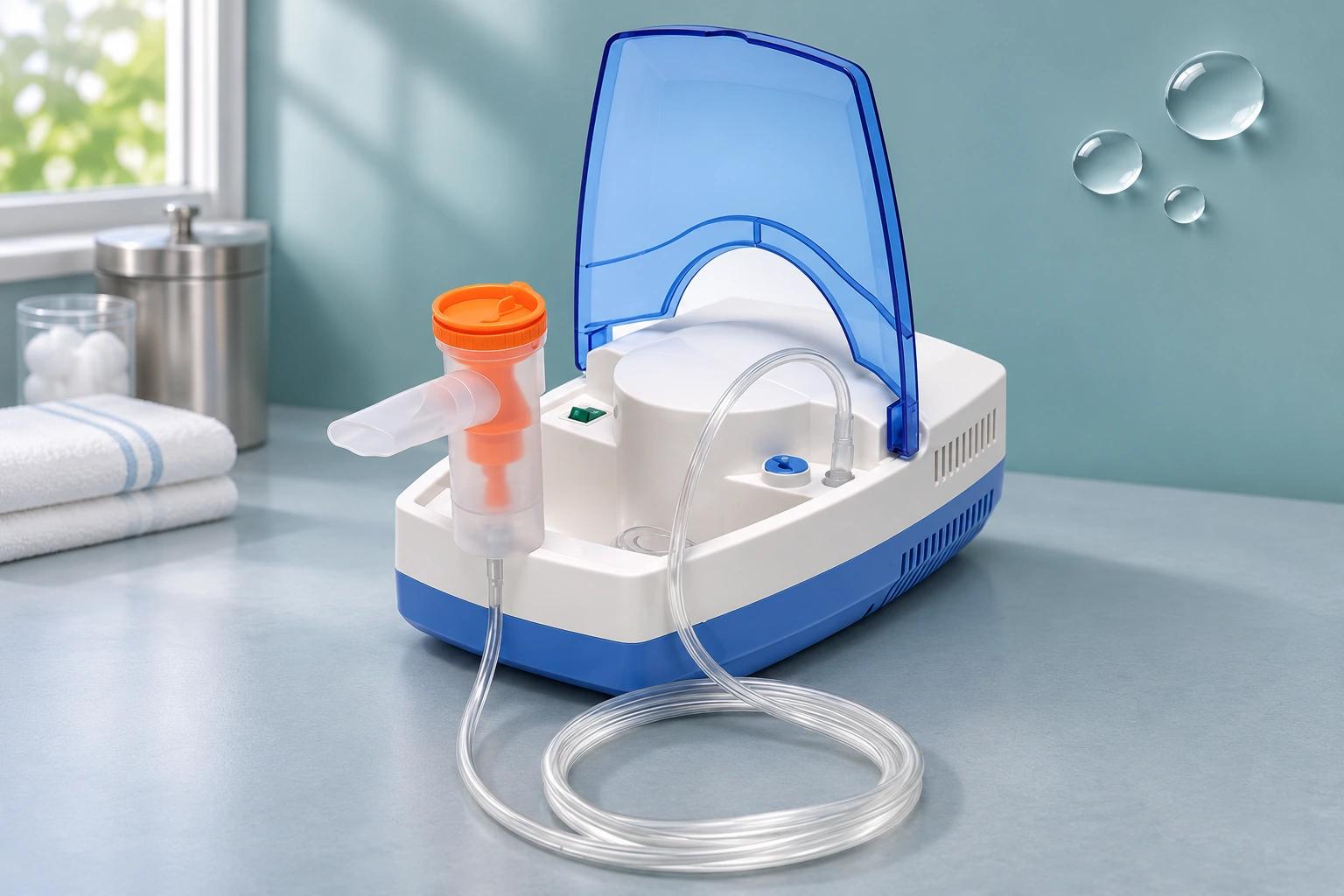
A white cloud is a poor way to identify a medical device. A nebulizer can produce mist without boiling its liquid; a steam inhaler relies on heated water. A room humidifier serves another purpose again. Similar-looking output does not make the products substitutes.
For pharmacy buyers, importers and home-care distributors, the useful comparison starts with three questions: what is carried into the air, how is it generated, and where is it delivered? Those questions reveal more than a dramatic plume in a product photograph.
01
Mist carries tiny liquid droplets
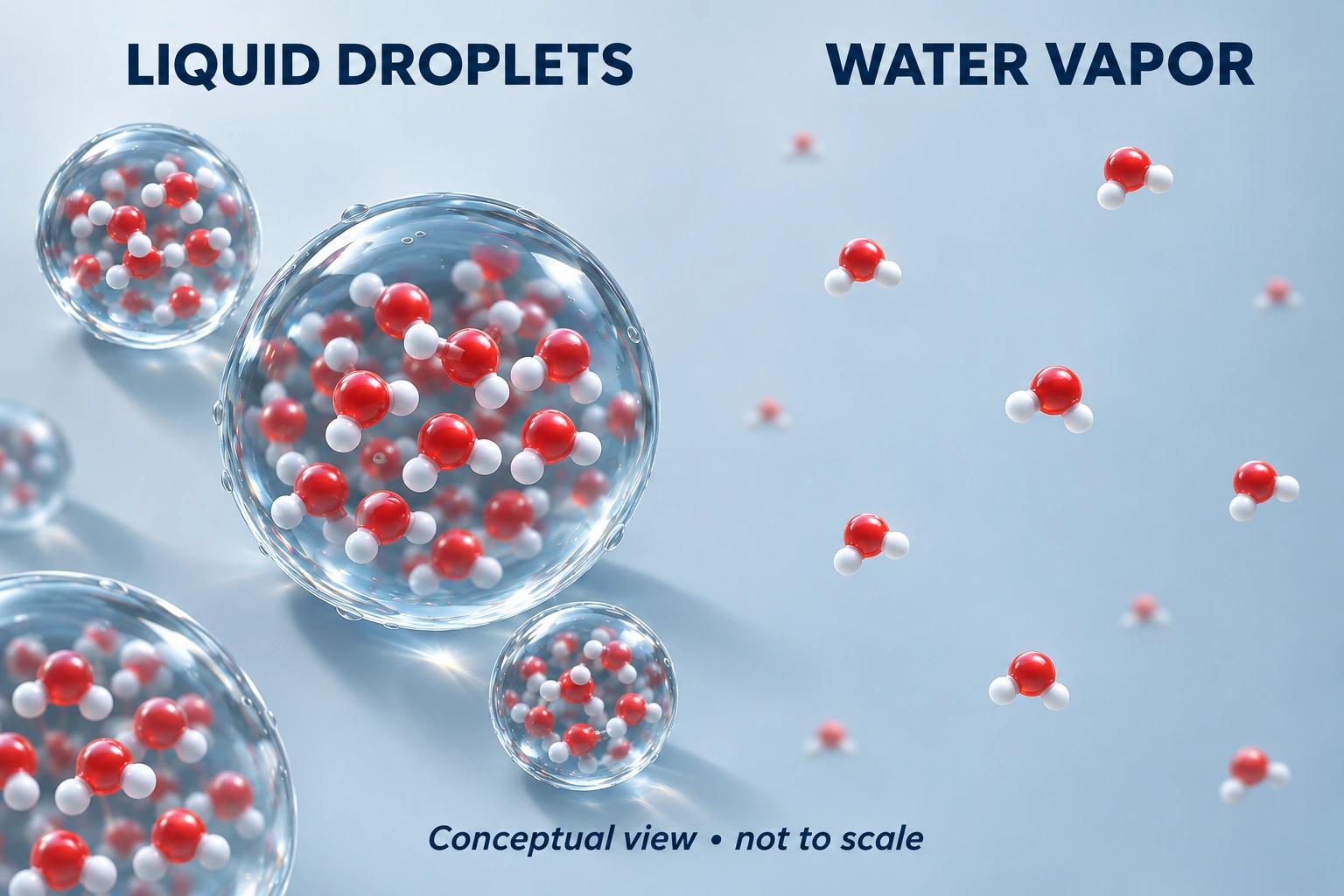
A nebulizer disperses liquid into droplets suspended in air—an aerosol. The liquid has been divided into small particles rather than converted entirely into water vapor. That is why describing every visible plume as “steam” creates the wrong picture of how the device works.
In a compressor system, a stream of compressed air works with the nebulizer cup to generate the aerosol. A mesh device uses a fine membrane with openings to generate droplets. The AARC guide to aerosol delivery devices explains these different mechanisms. Neither category depends on boiling the fill as its aerosol-generating principle.
The compressor housing and the aerosol generator also have different jobs. Air travels from the compressor through tubing to the cup; aerosol is produced at the cup and directed to the patient interface. A photographed cloud surrounding the compressor casing would obscure this distinction.
02
Heating changes what leaves the liquid
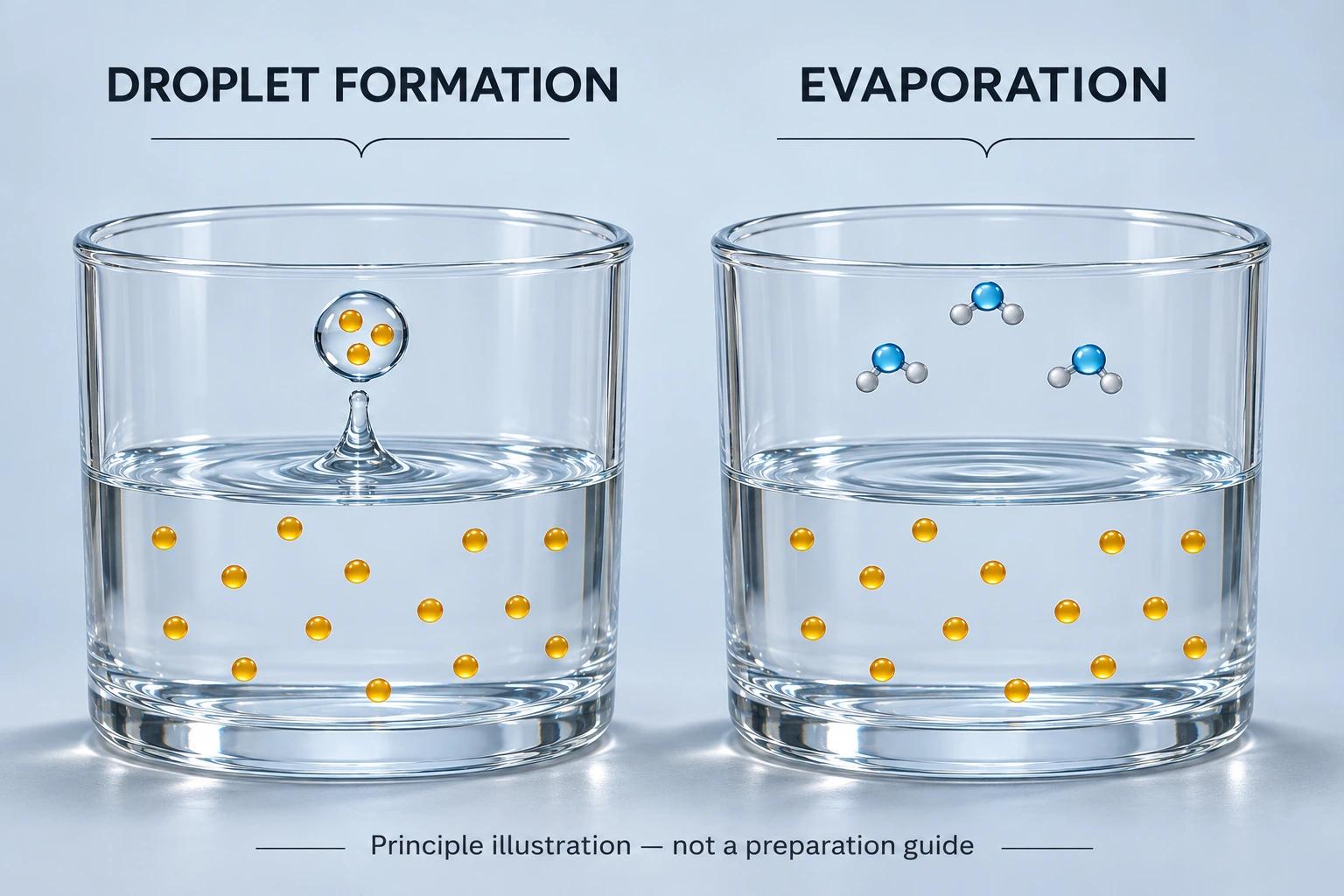
Heating water can produce water vapor. When vapor cools and condenses, it can form the familiar visible cloud. Nebulizing a liquid is different: the suspended droplets can carry substances dissolved in that liquid.
Salt provides a useful physical example. Evaporating a salt solution leaves salt behind, whereas droplets generated from that solution can contain salt. PARI's saline explanation uses this distinction to explain why steam and nebulized saline are not equivalent. It is a description of transport, not a recipe for preparing inhalation liquid.
This is also why a product should not be selected on the assumption that heating and nebulizing the same substance will deliver it in the same way. Only use a formulation intended for the prescribed device and treatment; a household steam preparation is not a substitute. Hot-water steam inhalation carries a separate scalding hazard, highlighted by Newcastle Hospitals' burns specialists.
03
Humidifying a room is a different delivery task
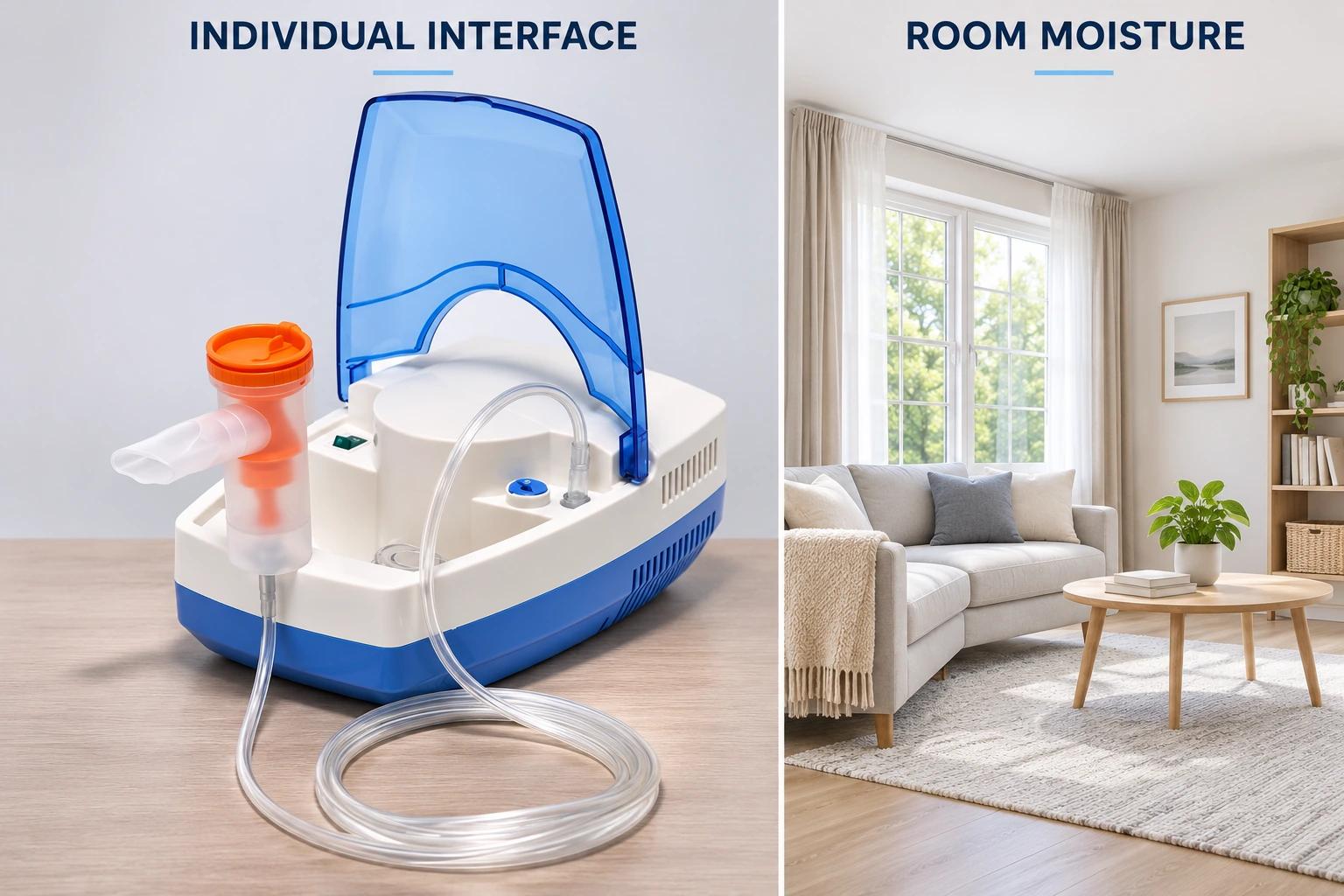
A room humidifier adds moisture to indoor air. A medical nebulizer is designed to generate an inhaled aerosol through its specified interface. Moving moisture into a room and directing an aerosol to an individual are different product jobs.
The comparison cannot simply be “nebulizers make mist; humidifiers make vapor.” The US Environmental Protection Agency distinguishes ultrasonic and impeller humidifiers, which disperse droplets, from evaporative and steam types. Some humidifiers therefore also produce liquid aerosols. The mechanism alone does not establish that a product is suitable for medication delivery.
For a buyer, room coverage belongs to a humidification discussion. The intended formulation, aerosol-delivery system and patient interface belong to a nebulizer discussion. A large visible cloud does not answer either question reliably.
04
Choose the product for the job, not the plume
Consider a pharmacy expanding its respiratory-care range. A request for a device to deliver prescribed nebulized medication is not answered by a warm-mist appliance marketed for room comfort. Conversely, a request to manage room humidity is not answered by the presence of a medication cup and mouthpiece.
Within the nebulizer category, buyers can then consider the format that fits their channel: a tabletop compressor platform or a handheld mesh design. This is the point to compare the actual device and its intended application, rather than ranking products by how much fog appears in a demonstration.
AXDCARE’s 2026 catalog includes compressor and mesh nebulizer families. The AXD-NB301 compressor model provides a starting point for a tabletop product discussion, alongside the wider nebulizer range. The choice begins with the delivery task and the intended formulation, not the appearance of the plume.
For private-label and distribution projects, describe the intended product category, channel and patient-use context when discussing options. This helps keep the conversation focused on a suitable nebulizer platform rather than a visually similar appliance.
Summary
The first distinction is physical: droplets are not the same as vapor. The second is practical: room moisture and an individually delivered medical aerosol serve different tasks. Clear product selection begins with both.
Related Links
Product and Sourcing Pages
End Article Support
Explore AXDCARE nebulizer options
Tell our team which nebulizer format and sales channel you are considering for your sourcing or private-label project.
Discuss a nebulizer projectRelated Reading