Industry News · Product Guides
Nebulizer Noise Level: How Distributors Compare Compressor Models for Home Use
Learn how distributors can compare nebulizer noise level claims, test conditions, home-use placement, demonstrations, and user education without unsupported promises.
Preface
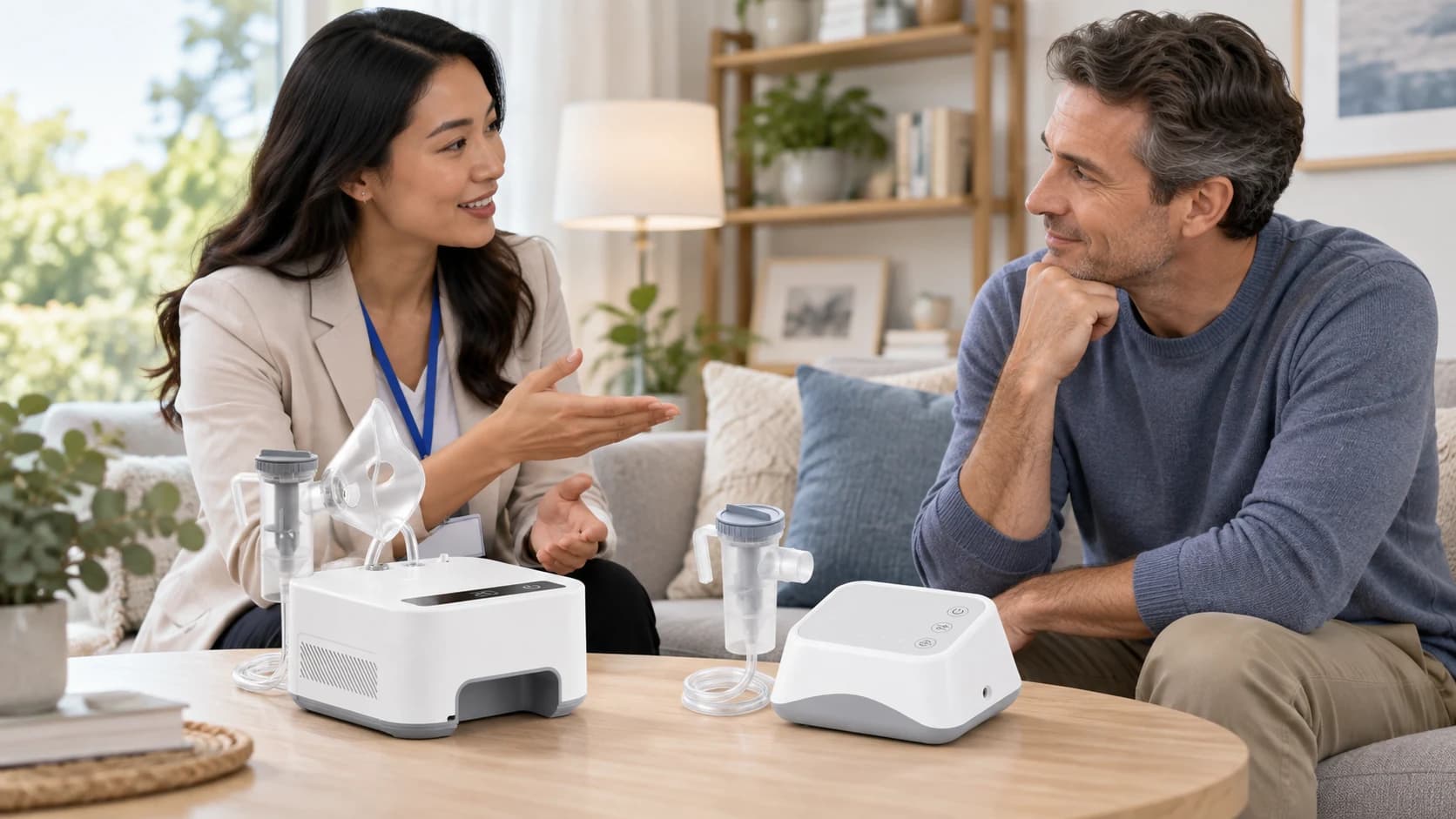
Nebulizer noise level matters because compressor models are often used in bedrooms, living rooms, and other shared home spaces. A buyer may see a decibel figure, hear a demonstration unit, or read a claim such as quiet operation, yet those signals are useful only when the model and test conditions are clear.
This guide does not rank AXDCARE models by sound or assign an unverified decibel value. It explains how distributors can review model-specific documentation, compare demonstrations fairly, and prepare user education that sets realistic expectations without turning sound into a medical-performance claim.
01
Why compressor nebulizers produce sound
A compressor nebulizer uses an electrically driven compressor to move air through the nebulizer system. Motor movement, airflow, the unit housing, and contact with the supporting surface all contribute to the sound a user hears. That operating sound is different from the changing sound that some instructions describe near the end of nebulization.
Sound alone does not show treatment quality, aerosol performance, or device suitability. A louder or quieter impression should not replace the prescribed device choice, exact product instructions, or qualified healthcare guidance.
02
Compare decibel figures only when the test basis matches
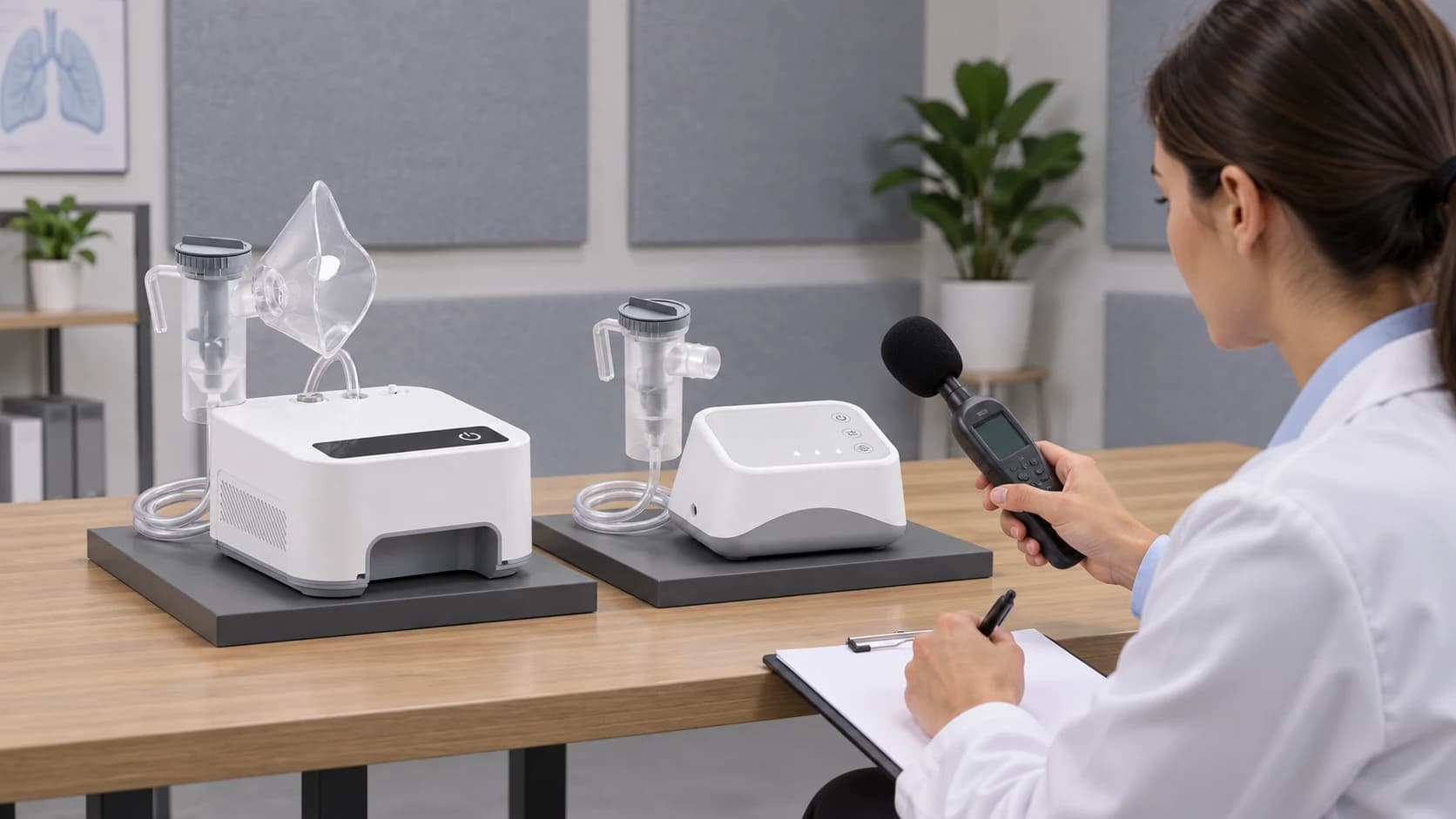
A published sound figure should be tied to the exact finished model and a defined test setup. Distance from the device, room background noise, surface type, accessories in use, and measurement method can change the reported or perceived result. Two numbers should not be presented as directly comparable when their test conditions are unknown.
For an importer or distributor, the review question is not simply which number is lower. Ask for the current model document, test basis, unit of measure, measurement distance, operating condition, and revision. Keep that record aligned with the product page and channel materials.
03
Build the home-use environment into the comparison
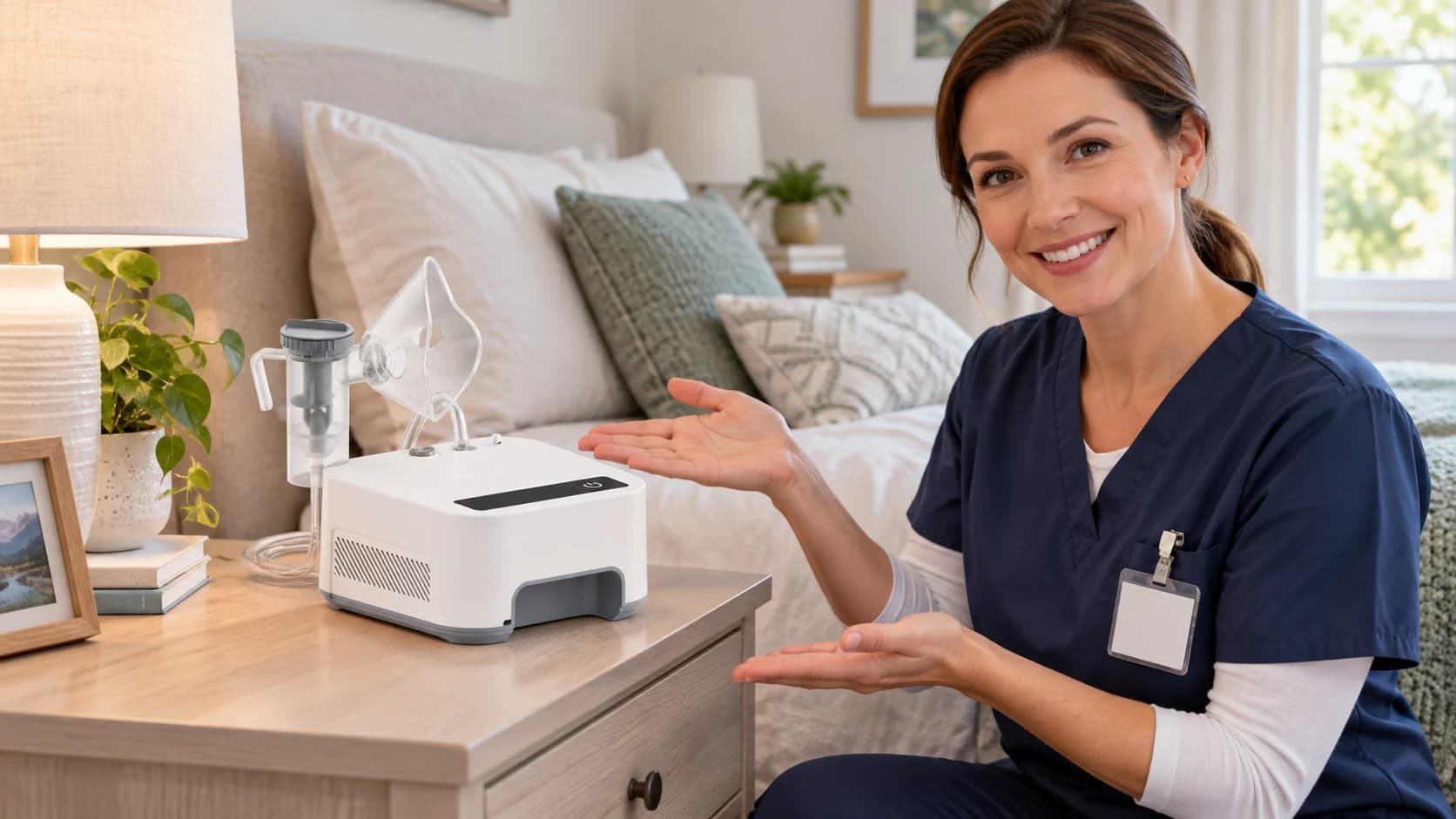
A realistic demonstration should place the compressor on a flat, stable surface with air openings clear, following the exact model instructions. Soft furnishings, enclosed shelves, or unstable furniture can change both safe operation and the sound a user perceives. Do not add cushions or covers as improvised sound control.
Room context also matters. A quiet bedroom at night creates a different expectation from a daytime living room or clinic education area. Distributors can define their main use scenarios before choosing how to present sound, size, power arrangement, controls, and storage.
Middle Article Support
Review a home-use compressor format
Use the AXD-NB316 product reference as a starting point, then request current model-specific sound, power, instruction, and package information.
View AXD-NB31604
Use a repeatable demonstration instead of a vague quiet claim
A distributor demonstration can use the same room, surface, device position, background conditions, and explanation for each model under review. Record the model and document revision, and avoid editing audio in a way that makes one unit appear artificially quieter.
The demonstration should explain that room acoustics and distance affect perception. If model-specific sound data is confirmed, show the documented value with its conditions. If it is not confirmed, describe the compressor format and invite a sample review rather than publishing a number.
05
Compare the complete home-use experience
Sound is one part of product planning. Buyers should also review the documented power format, footprint, controls, storage needs, operating instructions, and the exact package configuration for the model. These factors shape where and how a household can use and store the device.
AXD-NB316 and AXD-NB505 are current AXDCARE compressor-nebulizer references with different housing and control presentations. They are used here only to illustrate a structured comparison. This article does not state that either model is quieter or assign either model a sound rating.
06
Turn sound expectations into useful channel education
Product pages and retailer training can explain that a compressor makes operating sound, show an appropriate placement scene, and direct users to the exact instructions. Support teams should also distinguish normal model-specific operating sound from an unusual change that requires the user to stop and follow the support process.
This creates a better post-purchase experience without promising silence. The distributor gives users a realistic expectation, a clear setup boundary, and a model-specific route for questions.
07
Reference sources
MedlinePlus nebulizer overview: https://medlineplus.gov/ency/patientinstructions/000006.htm
PARI Vios setup instructions for a flat, stable surface and clear vents: https://www.pari.com/fileadmin/user_upload/PARI.com-US/Documents/Nebulizer-systems-for-the-lungs/Vios/310D0121-Rev-B-04-18-Vios-IFU-Plus-Bubbles-EN-ES-COMBO.pdf
OMRON CompAir product example showing that sound claims should be model-specific: https://omronhealthcare.com/products/compair-compressor-tabletop-nebulizer-system-ne-c801
Summary
Nebulizer noise level is most useful when it is reviewed as a model-specific product attribute within a real home-use scenario. Fair comparison requires documented conditions, repeatable demonstrations, accurate channel copy, and realistic user expectations.
AXDCARE can discuss current compressor-nebulizer formats with professional buyers and help organize the model, sample, documentation, and demonstration questions needed for a channel review.
Related Links
Product and Sourcing Pages
Frequently Asked Questions
Buyer Questions
Are compressor nebulizers supposed to make noise?+
A compressor model normally makes operating sound because it uses a motor and airflow. The expected sound and any warning signs should be checked in the exact model instructions.
Does a quieter nebulizer work better?+
Sound level alone does not establish aerosol performance, treatment suitability, or overall quality. Buyers should review the full model documentation and intended use context.
How should distributors compare nebulizer noise level?+
Use the same demonstration environment, confirm the exact model and test conditions, and avoid comparing decibel figures that were measured under different or unknown conditions.
What if the sound changes unexpectedly?+
Stop improvising and follow the exact model instructions and distributor support process. An unusual sound should not be diagnosed from a general article.
End Article Support
Plan a fair product demonstration
Share the target channel, home-use scenario, models under review, and required documentation so AXDCARE can discuss a focused sample comparison.
Contact AXDCARERelated Reading