Industry News · Product Guides
Why Blood Pressure Readings Vary: A User-Education Guide for Distributors
Explain why blood pressure readings vary and how distributors can build accurate home-monitor education, repeat-measurement guidance, and support escalation.

Preface
People often ask why blood pressure readings vary when they measure twice, change rooms, compare home and clinic results, or use the monitor at a different time of day. A single reading is a snapshot, and both normal body variation and measurement conditions can influence the result.
This article answers the user question first, then shows distributors how to build responsible post-purchase education. It does not diagnose hypertension, interpret an individual's readings, replace the product instructions, or tell a user to change medication.
01
Blood pressure changes, and measurement conditions matter
Blood pressure is not a fixed number throughout the day. Activity, rest, stress, timing, and other personal factors can change a reading. Technique also matters: cuff fit, body position, arm support, talking, clothing, and insufficient rest can make two measurements less comparable.
That means a difference does not automatically prove that the monitor is faulty. It also does not prove that the reading is clinically unimportant. Users should follow the supplied instructions and qualified healthcare guidance for their own monitoring plan.
02
Make repeat measurements comparable
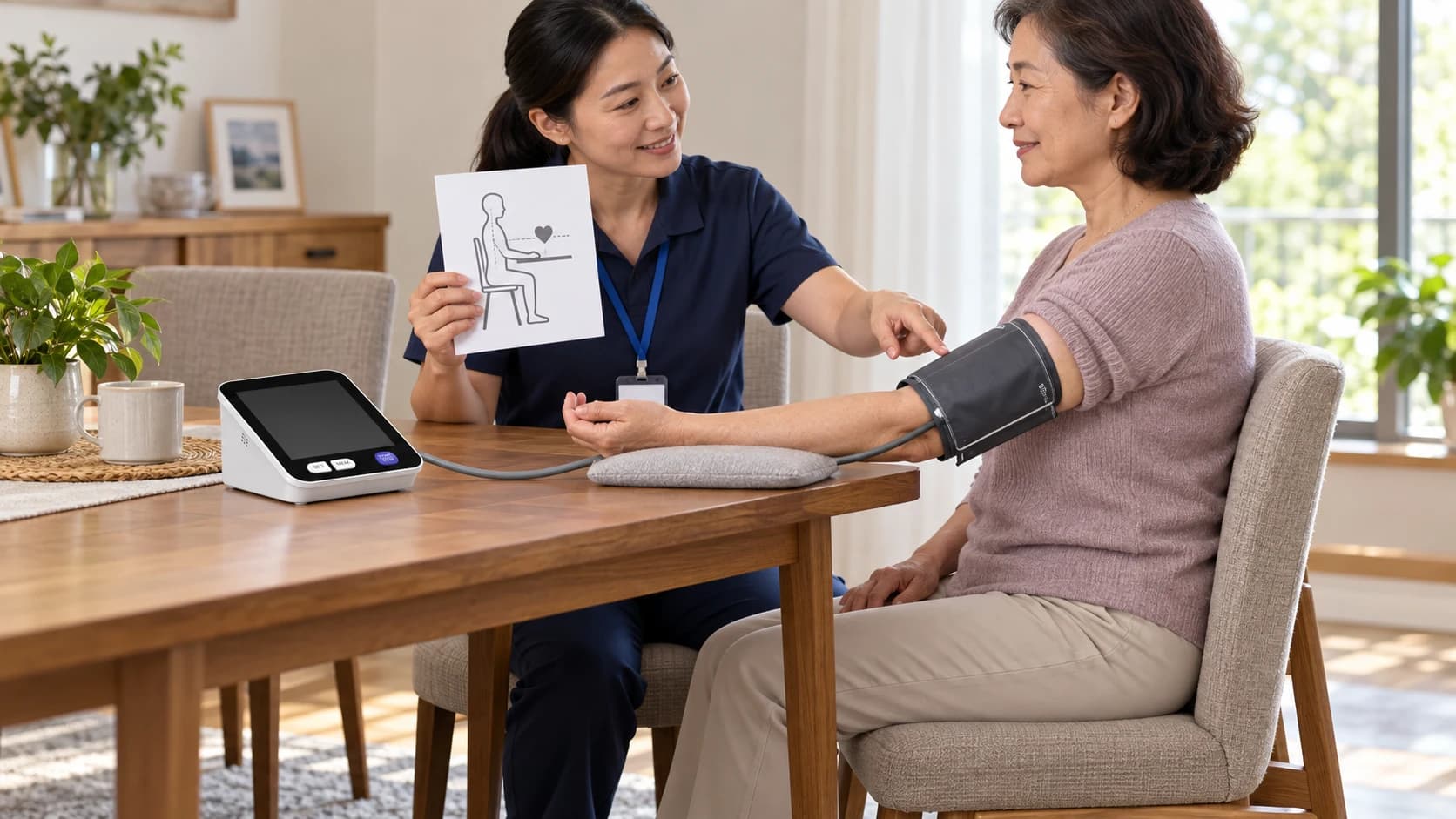
The American Heart Association advises users to prepare consistently, sit quietly, support the arm at heart level, use the correct cuff fit, avoid talking, and take multiple readings as directed. The exact timing and monitoring schedule should follow healthcare guidance and the applicable product instructions.
For channel education, the key message is consistency. A quick-start card, video, pharmacy demonstration, and support script should show the same posture and cuff-placement logic instead of presenting one isolated number as the complete picture.
03
Explain the difference between variation and device questions
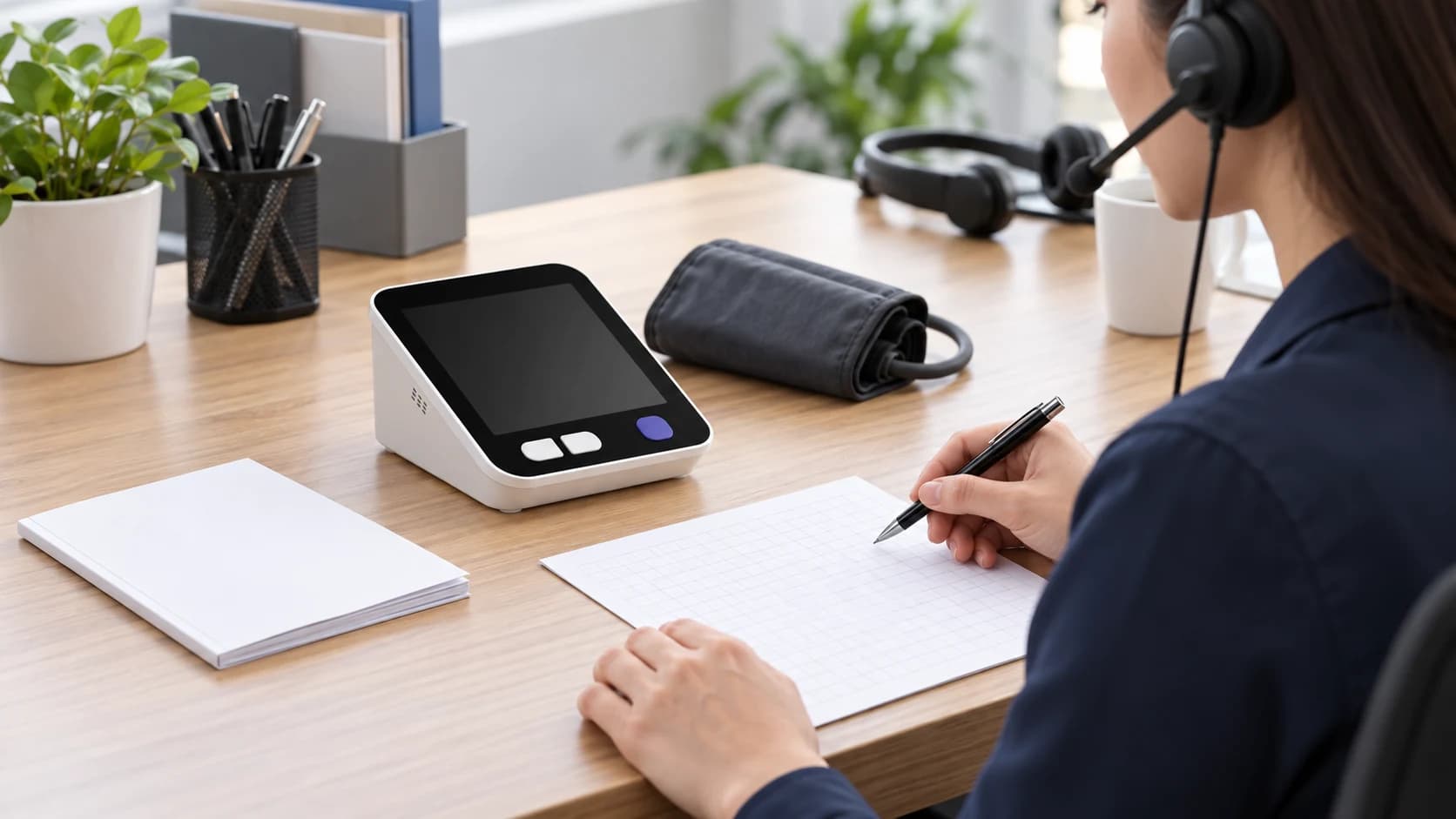
A support team can first ask whether the same person, arm, cuff, posture, rest period, time context, and measurement sequence were used. This is an education check, not a medical diagnosis. If the setup differs, the user can repeat the measurement according to the instructions.
If readings remain concerning, the cuff or device appears damaged, an error persists, or the user has symptoms, the distributor should direct the user to the model support route and appropriate healthcare guidance. Support staff should not reinterpret medical results or recommend treatment changes.
Middle Article Support
Review a current upper-arm monitor format
Use the BP05-LCD product reference as a starting point, then confirm the current cuff, instruction, package, and education materials for the project.
View BP05-LCD04
Use a reading log to improve the conversation
A dated log can help the user record readings and relevant context without turning the distributor into a clinician. Useful non-diagnostic fields may include date, time, arm used, whether the standard preparation steps were followed, and whether the device showed an error.
The American Heart Association describes a record of readings over time as more informative than one snapshot. A distributor can provide a blank logging format and explain how to share it with a healthcare professional, while keeping personal health data handling appropriate to the channel.
05
Build a post-purchase education kit
A responsible kit can include the current model instructions, a clearly illustrated setup card, cuff-placement reminders, a blank reading log, common setup checks, the model support contact path, and a clear boundary for medical questions. Every item should match the exact monitor and cuff configuration.
BP05-LCD is a current AXDCARE upper-arm blood pressure monitor reference used here for visual education. This article does not assign it a validation status, accuracy claim, cuff range, feature set, or market approval. Confirm current model materials for the specific project.
06
Keep channel images technically accurate
User-education images should show the cuff on a bare upper arm, a supported back, feet resting on the floor, and the arm supported near heart level when that setup matches the applicable instructions. Decorative lifestyle photography that shows poor technique can undermine the written guidance.
This matters across product pages, pharmacy displays, manuals, help centers, and social content. A consistent visual standard makes support information easier to understand and reduces avoidable confusion.
07
Reference sources
American Heart Association home blood pressure monitoring guidance: https://www.heart.org/en/health-topics/high-blood-pressure/understanding-blood-pressure-readings/monitoring-your-blood-pressure-at-home
American Heart Association measurement reliability overview: https://professional.heart.org/en/science-news/measurement-of-blood-pressure-in-humans/top-things-to-know
Mayo Clinic overview of home and office reading differences: https://www.mayoclinic.org/diseases-conditions/high-blood-pressure/expert-answers/blood-pressure/faq-20057853
Summary
Blood pressure readings vary because the body and the measurement context both change. Consistent preparation, correct cuff use, repeat measurements as directed, and a record over time create a more useful discussion than one isolated number.
AXDCARE can help professional buyers review model-specific user-education, packaging, support, and image requirements for an upper-arm blood pressure monitor project.
Related Links
Product and Sourcing Pages
Frequently Asked Questions
Buyer Questions
Why do blood pressure readings change when taken twice?+
Blood pressure can vary naturally, and technique or conditions can also differ. Follow the monitor instructions, use consistent preparation and positioning, and follow healthcare guidance for repeat measurements.
Does a different reading mean the monitor is inaccurate?+
Not automatically. First check whether cuff fit, posture, arm support, rest, talking, timing, and the measurement sequence were consistent. Use the model support route if a device concern remains.
Can a distributor explain whether a reading is medically dangerous?+
A distributor should provide product-use education and escalation information, not diagnose or interpret an individual's condition. Medical questions and symptoms require qualified healthcare guidance.
What should a post-purchase education kit include?+
Use the current model instructions, setup illustrations, cuff-placement reminders, a blank reading log, common setup checks, support contacts, and a clear medical-advice boundary.
End Article Support
Plan post-purchase education for your channel
Share the target market, sales channel, model, language, and support-material needs for a focused AXDCARE discussion.
Contact AXDCARERelated Reading